
Acacia
Warm grain, mid-weight, the giftable look most retail sets are built on.
Napop Win manufactures wooden kitchen utensils and utensil sets in Zhongshan, Guangdong, for importers, wholesalers, retail chains and private-label brands. Spoons, spatulas, turners, ladles, slotted spoons, salad servers, tongs and cooking sets — in acacia, beech, olive wood, rubberwood and bamboo
with finishes and packaging matched to your market. If you are building or refreshing a wooden utensil range, this page covers the decisions that matter: wood, finish, set composition, customisation, and how to check that bulk production matches the sample you approved.
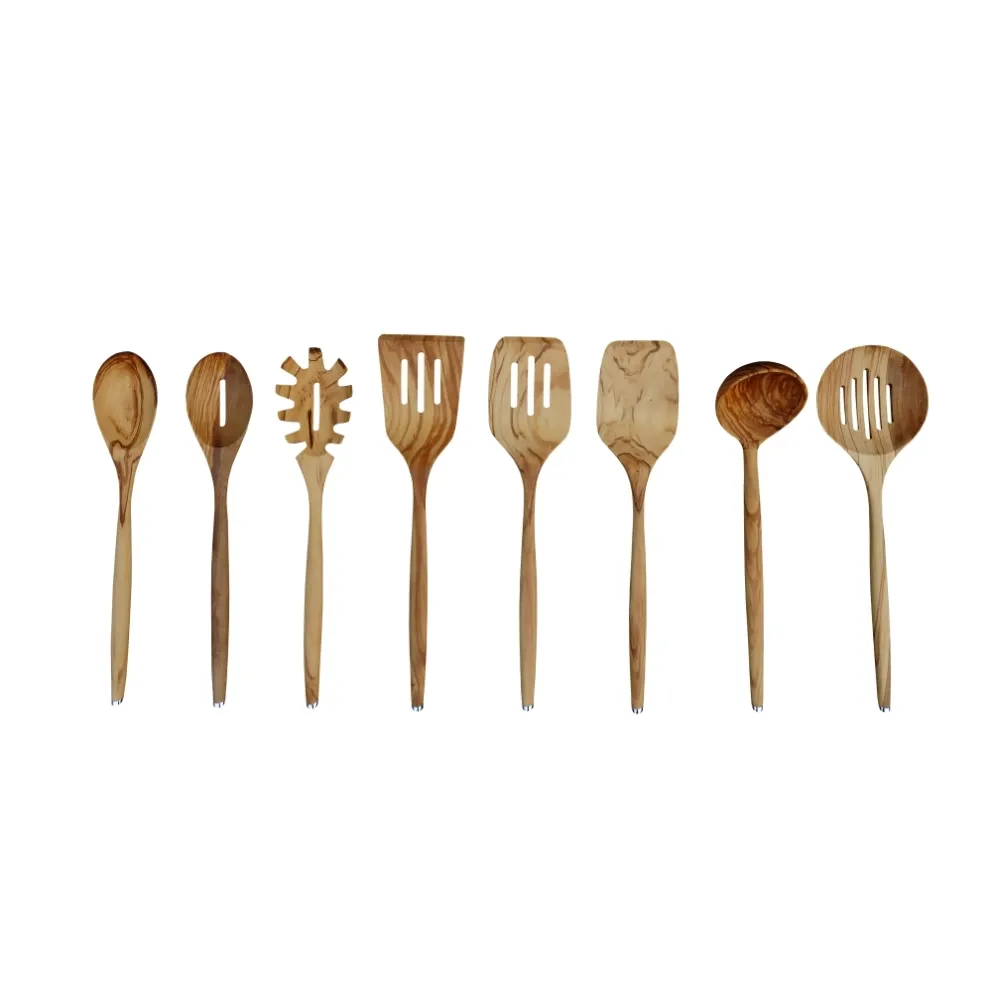
The wood decides how a utensil looks, feels and ages.
Warm grain, mid-weight, the giftable look most retail sets are built on.
Pale, even grain, takes colour and logos cleanly, the workhorse for large programs.
Dramatic grain, premium shelf presence, higher cost and more variation piece to piece.
Lighter and more economical for price-driven lines.
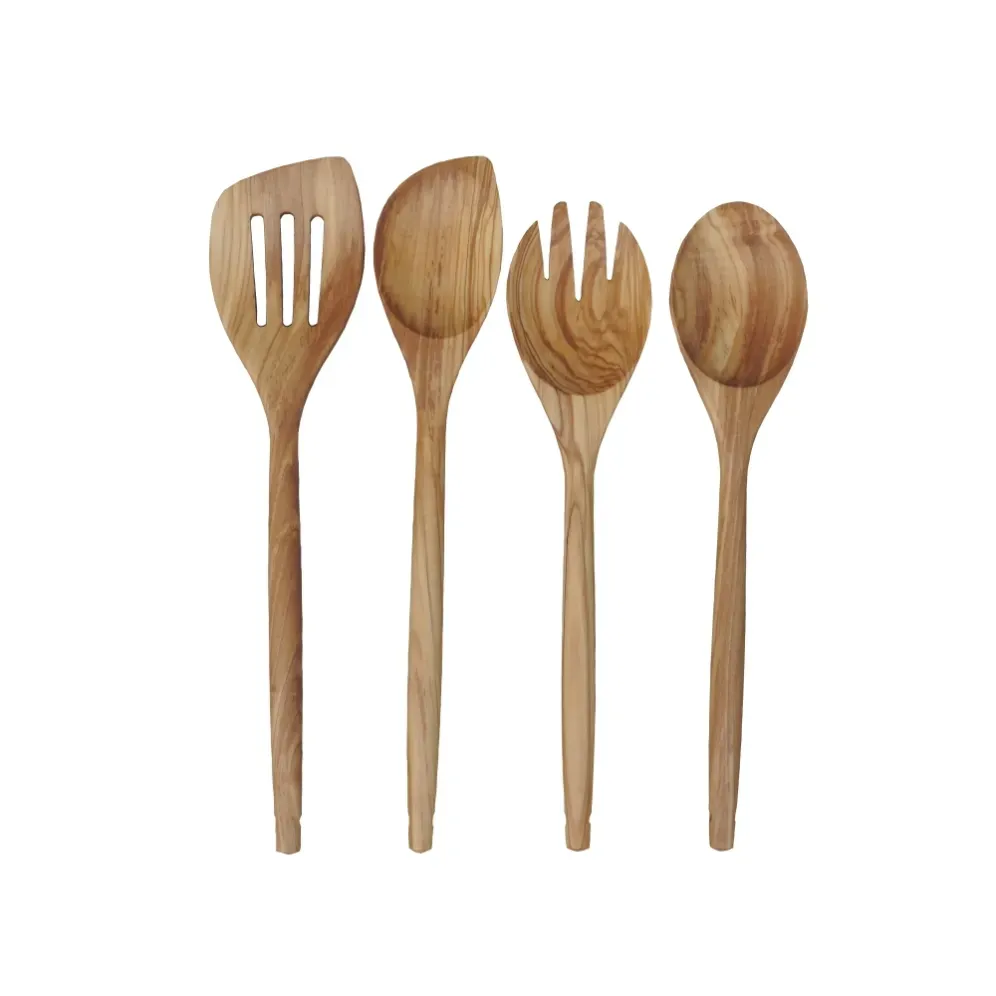
Finishes are food-contact options chosen by market: natural mineral oil for a matte, easy-care surface, or lacquer where a smoother, more sealed finish is preferred.
The honest differences between the two are covered in our guide to mineral oil vs lacquer for wooden spoons, and the wider wood choice in wood materials for kitchenware. For olive wood programs specifically, see the olive wood utensil buying guide.
Most buyers don't order single utensils — they order a set that has to make sense on a shelf. Common formats run from 4-piece starter sets to 7- and 8-piece cooking sets, with or without a holder. Each piece should earn its place: a set that looks random sells like one.
Customisation options include laser-engraved logos on handles, custom set composition, and retail packaging from kraft boxes to printed gift boxes.
The full picture is in our OEM packaging options and the private label utensil set guide.
If you have a drawing or a design of your own, we prototype it before anyone talks about bulk orders: drawing review, mold where the shape needs one, a sample fee that is credited against the order, and a finished prototype you can hold and test.
The whole sequence — and what each step costs and takes — is written out in custom wooden utensil sets: from drawing to prototype.
Quotes for what looks like the same utensil set can differ by 30% between factories. The gap is usually wood grade, blank thickness, sanding time, coating and packaging — the details are in
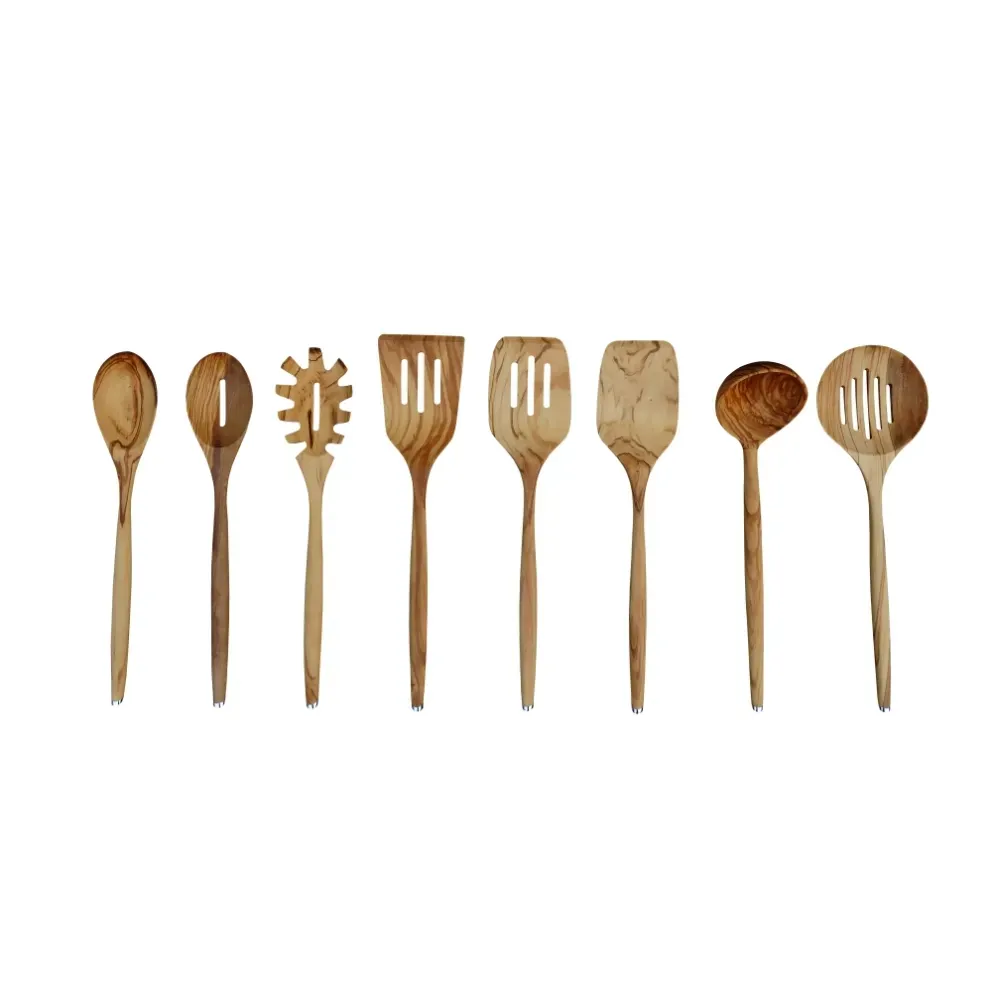
Our way: send the design or photos, the wood and finish you want, set composition, packaging and a quantity. We quote item by item against that spec, so you can see what you are paying for.
As a guide, most utensil-set programs start around 500 sets per style, and standard production runs about 45 days from deposit — both depend on the final spec, so confirm them on your enquiry. Prices are quoted per order, because the choices above genuinely move them.
A good sample is easy. A thousand sets that match it is the job.
Before shipping we check moisture content, sanding and finish consistency, dimensions against the approved sample, and logo and packaging accuracy — the same points we list in wooden kitchenware quality checks before shipping and keeping samples and bulk orders consistent.
Finish safety questions are answered in food-safe finishes for wooden kitchenware.
Browse the wooden utensils range, or send your design, photos or target set directly through the contact page. Tell us the wood, the market and the quantity — we will come back with an itemised quote and a sample plan.