Mineral Oil vs. Lacquer: Which Finish Is Better for Wooden Spoons?
Mineral oil or lacquer? Compare wooden spoon finishes, including food-contact suitability, durability, cleaning, and care, to choose the right option for your kitchen.
Should a wooden spoon be treated with mineral oil or with a lacquer finish?
When choosing wooden spoons and spatulas, many people find themselves weighing the same two options: a natural wood finish maintained with mineral oil, or a smooth, glossy lacquer finish. A customer visiting our factory for a meeting last week asked us this very question.
One preserves the natural look and feel of the wood. The other creates a sealed surface that is easier to clean and more resistant to staining. Neither is automatically better, but their suitability for different uses, safety considerations, lifespan, and care requirements can differ considerably. Those differences matter when a wooden spoon regularly comes into contact with hot oil, hot soup, dish soap, and hot water.
It’s easy to see why lacquered utensils catch the eye. A coating often gives the same piece of wood a richer color and more pronounced grain. The surface feels smooth, and as part of a coordinated utensil set, it can look especially polished. Mineral oil finishes tend to be more understated, preserving more of the wood’s original texture.
But once a wooden spoon comes home, it has a job to do: serving rice, stirring soup, or making porridge. After repeated contact with hot food and regular washing, the differences beyond appearance begin to show.
The Two Finishes Protect Wood in Different Ways
Mineral oil treatment works mainly by allowing oil to penetrate the wood. The oil travels through the pores into the wood fibers, helping replenish and retain moisture and reducing drying, shrinkage, and cracking. Unlike a lacquer, it generally does not cure into a hard film on the surface. What you feel is still the wood itself, so the smoothness of the finished spoon depends largely on how carefully it was sanded.
A lacquered finish forms a protective layer over the wood. It is a film-forming treatment: the coating cures on the spoon’s surface, creating a continuous barrier that seals the pores, much like putting a raincoat on the wood.
A well-finished lacquered spoon has a smooth, glossy surface that helps keep water and oil from soaking into the wood. It generally needs no additional oiling after purchase, maintains a consistent appearance, and is less prone to darkening. As long as the coating remains intact, it reduces direct contact between the wood, food, and water, making the spoon easier to wash and keep clean.
Lacquered Spoons Are Easy to Clean at First; Mineral Oil Finishes Are Easier to Maintain as They Wear
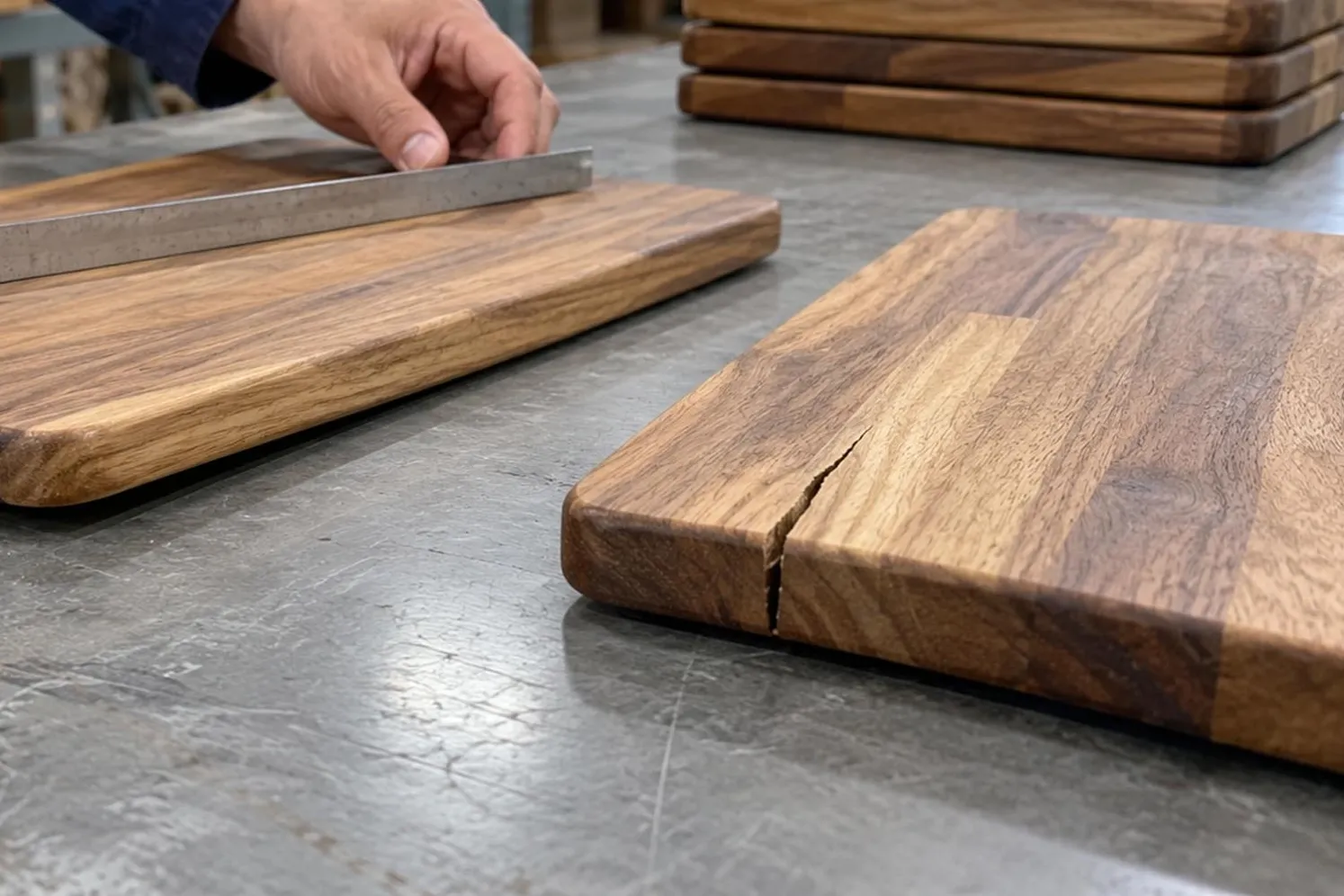
When the lacquer is intact, coated wooden spoons tend to resist staining, and food residue is usually easier to remove. Over time, however, friction, knocks, and repeated wetting and drying can leave scratches or cause the coating to crack, blister, or peel.
The USDA’s Wood Handbook also notes that film-forming finishes, such as varnish, can provide a smooth, easy-to-clean surface but may eventually crack or peel. It recommends minimizing prolonged exposure to water and keeping these items out of the dishwasher. Reference: Wood Handbook, chapter on wood finishing
Mineral oil finishes do not have this hard surface film, so there is no coating to flake off. Their protection is not permanent, though. After repeated use and washing, the wood may look paler, feel dry, or lose some of its original smoothness. That is when it may need another application of oil.
Slightly raised grain can often be improved with careful refinishing. Deep cracks, noticeable splinters, or mold, however, are reasons to stop using the utensil.
When thinking about durability, consider what matters more to you: keeping the original appearance for longer, or being able to maintain the surface more easily as it wears.
How You Wash a Wooden Spoon Often Matters More Than Its Finish
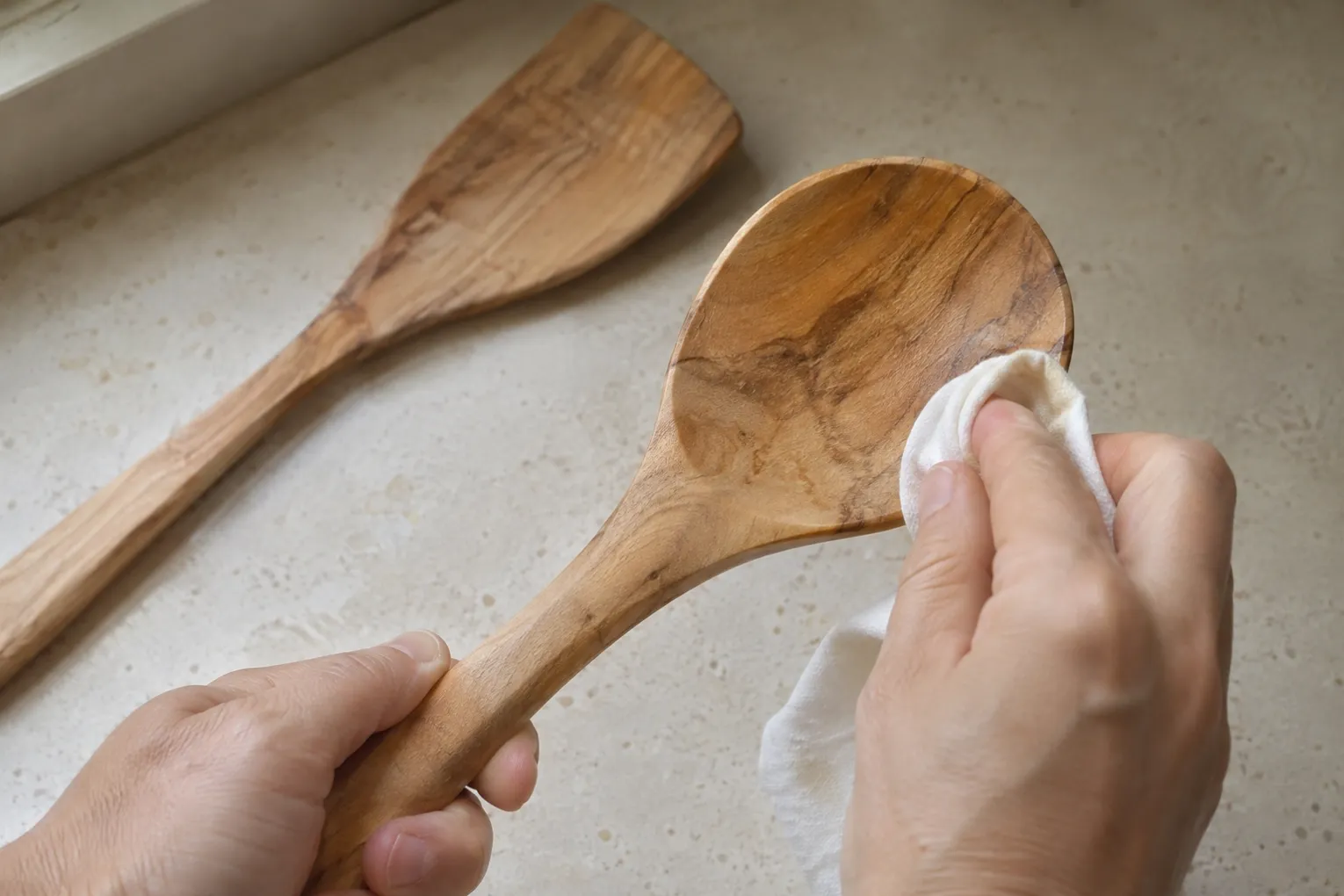
Whichever finish you choose, wash the spoon promptly by hand. Use dish soap and a soft sponge to remove food residue, rinse thoroughly, and towel-dry it before leaving it somewhere well ventilated to dry completely.
Avoid leaving wooden utensils soaking in the sink. At the same time, do not skip proper cleaning in an effort to protect the finish. Unless the product instructions explicitly allow it and the claim is supported by appropriate testing, do not assume the utensil can withstand a dishwasher, prolonged boiling, or high-temperature sanitizing.
A mineral oil finish does not need to be reapplied after every wash. Follow the product’s care instructions and check how the wood looks and feels once it is dry.
With lacquer finished utensils, pay attention to changes in the surface. If the lacquer starts to blister or peel, stop using the utensil for food contact.
Practical Tips for Choosing and Using Wooden Utensils
-
For everyday cooking, preparing baby food, and frequent contact with hot oil, prioritize a mineral oil finish.
A properly applied food-grade mineral oil and beeswax treatment offers the highest overall level of safety among the available options. Before first use, you can apply a thin layer of oil and leave it overnight to allow the wood to absorb it. After washing, towel-dry the utensil promptly and hang it somewhere well ventilated. Avoid storing it in a closed container while it is still damp.
-
If you choose a lacquer finish, keep one basic requirement in mind.
If a lacquer wooden spoon has no information about compliance with food-contact standards and no supporting test report, avoid using it to lift hot food or handle hot oil. If the lacquer turns white, peels, cracks, or flakes off, replace the spoon rather than continuing to use it.
-
Some problems apply to both types.
Regardless of the finish, spoons made from poor-quality softwood or poorly bonded pieces can be prone to mold and cracking. Neither type should be put in the dishwasher or subjected to prolonged boiling or soaking.
With a mineral oil finish, you are choosing a natural, safe utensil that can be maintained and used repeatedly, with some time set aside for care. With a lacquer finish, you are choosing easy cleaning, stain resistance, and a consistent appearance, while accepting the possibility of lacquer wear and the need to choose the lacquer surface carefully.
There is no single winner. The better choice is the one that suits the way you cook and care for your kitchen tools.