Why Quotes for the Same Utensil Set Differ by 30%
Same utensil set photo, quotes 30% apart? What each price really covers — wood selection, dimensions, sanding, packaging, quantity and delivery terms.
Why Do Quotes for the Same Wooden Utensil Set Differ by 30% Between Factories?
You send the same wooden utensil set photo to three factories. One quotes $5 per set, another $6, and the third $6.50.
That is a 30% difference between the lowest and highest prices. For a bulk order, it is enough to make you ask: are they quoting the same product?
Sometimes they are working to different specifications. Sometimes their production costs are simply different. Before choosing a supplier, it helps to understand what each price actually covers.
1. The Same Photo Does Not Mean the Same Wood
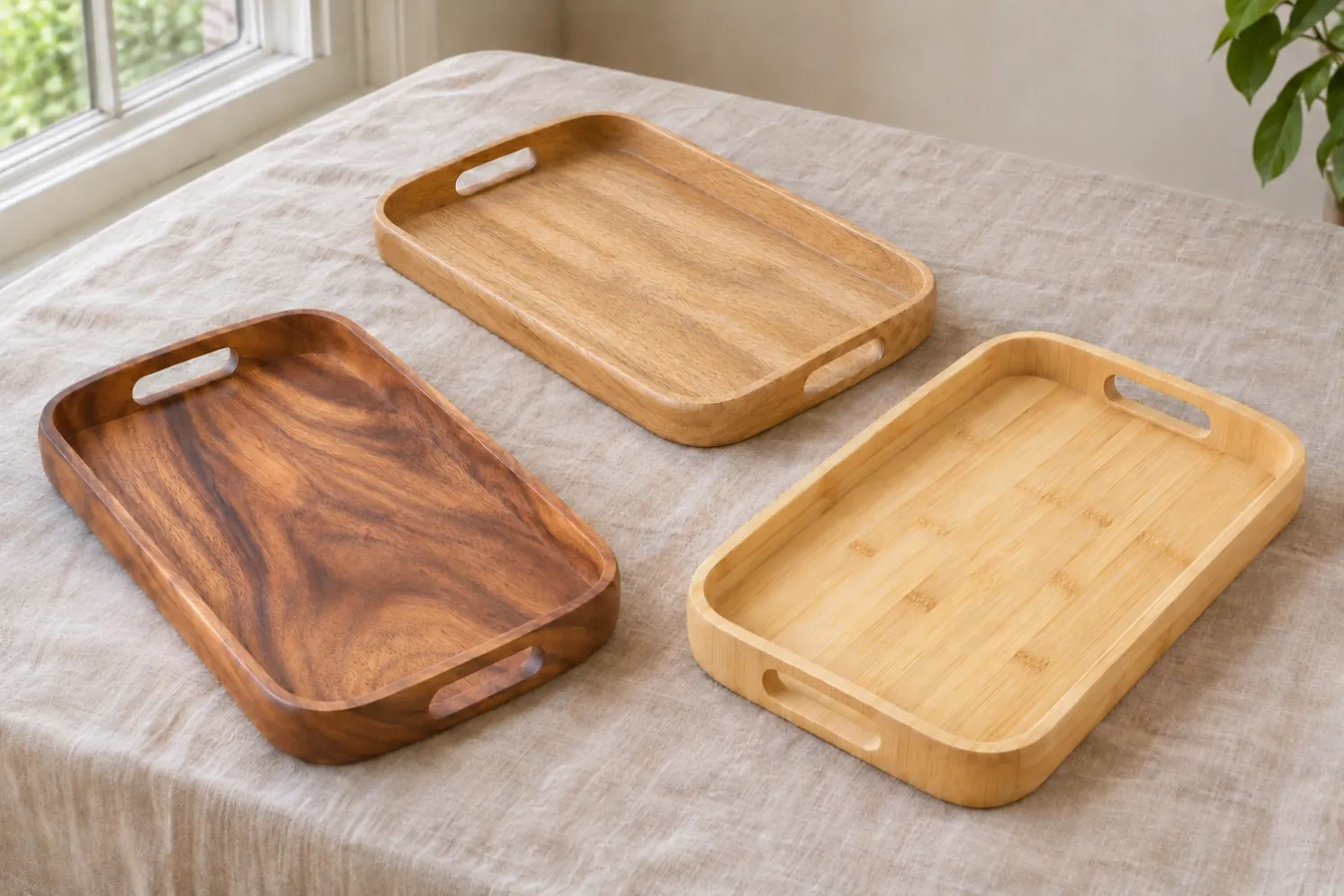
A product photo shows the general appearance, but it may not clearly identify the wood species. Factories can make different assumptions unless you specify the material.
Even when both quotes say "acacia wood" or "olive wood," the selection requirements may differ.
Natural wood varies in colour and grain. If you accept those differences, the factory can use more of the available material. If you want every piece in a set to have a closely matched colour, more sorting is needed, and some otherwise usable pieces may be left out.
Neither approach is automatically wrong. The important thing is to agree on what is acceptable before ordering.
2. Dimensions Can Change the Price More Than You Expect
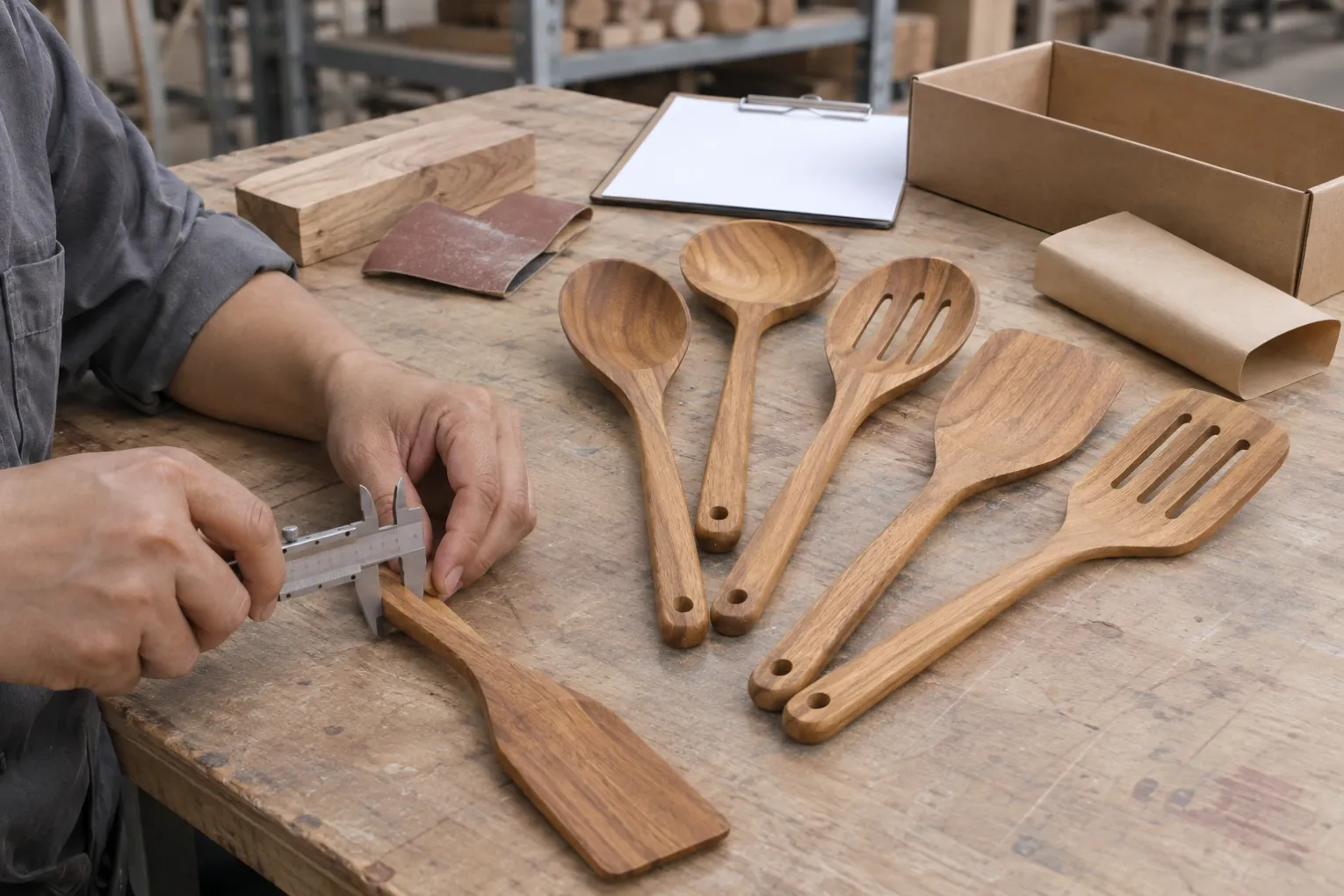
"Six-piece wooden utensil set, approximately 30 cm long" still leaves plenty of room for interpretation.
How wide is the spatula? How thick is the handle? How deep is the spoon bowl?
A thicker, wider design uses more wood and may require more shaping. Those differences can be difficult to see in photos, especially when the products are photographed from different angles.
Ask each factory to quote the same dimensions. For an existing design, a physical reference sample can make the comparison much clearer.
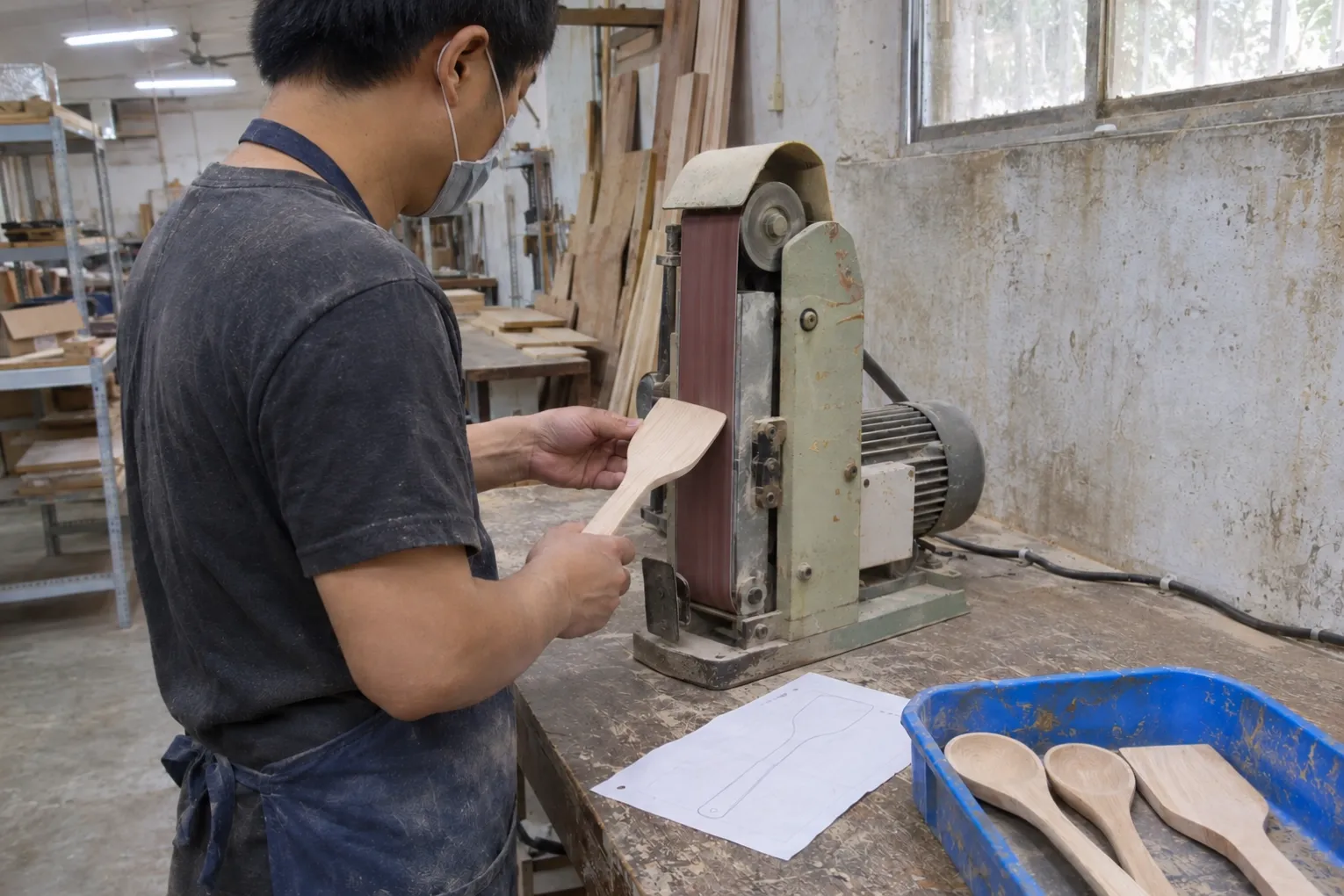
3. Sanding and Wood Preparation Take Work
Wooden utensils may look simple, but the finish depends on several production steps.
Run your fingers around the spoon bowl, along the handle edges and inside the hanging hole. Rough spots in these areas are easy to miss in a photograph.
More careful sanding takes labour. Proper wood drying and moisture checks also require time and control. Problems at this stage can contribute to cracking or changes in shape later.
When comparing samples, look beyond the colour. Check the surface, edges and overall feel, and ask whether the sample represents the standard included in the bulk quotation.
4. Packaging and Custom Details May Be Included—or Added Later
One price may cover utensils packed together in a shipping carton. Another may include individual wrapping, logo engraving and a printed gift box.
For a relatively low-cost product, these extras can make a noticeable difference to the price per set.
The surface finish should also be clearly specified. "Natural finish" alone may not tell you what treatment the factory has included.
Oil or lacquer, one coat or two, also changes the cost — and how the surface holds up after repeated washing. Two factories can both write "natural finish" and mean quite different work.
Ask for a written breakdown of the product, finish, branding and packaging. This makes it easier to see where the difference comes from.
5. Quantity and Delivery Terms Must Match
A quote for 500 sets should not be compared directly with a quote for 3,000 sets. Setup and other fixed costs are spread across different quantities.
Also confirm whether the price is per piece or per complete set.
Delivery terms matter too. EXW and FOB prices cover different responsibilities and costs. For FOB quotations, confirm the named port as well.
A low headline price is only useful when you know what you will need to pay on top.
6. A Higher Price Does Not Always Mean Better Quality
Some factories regularly produce similar utensils and already have suitable equipment, tools and trained workers. They may offer a lower price because the work fits their production line well.
Other factories may need more setup, outsource certain steps or carry higher overheads.
That is why price alone cannot tell you which supplier is better. A higher quote should come with a clear explanation of what you are getting.
7. The Quality Standard Behind the Price
Every batch produces some pieces that should not be shipped. A factory that checks strictly and removes them carries that cost inside its price. A factory with a looser standard ships more of them, and the cost shows up later in complaints and returns.
Ask what standard the bulk price is based on — how pieces are sorted, and what counts as a defect. It is part of what you are paying for.
What Should You Send Before Asking for a Quote?
Give each factory the same basic information:
If the prices still differ by 30%, ask both suppliers to explain their assumptions and compare physical samples against the same requirements.
At Napop Win, you can send us a reference photo or drawing, your expected quantity and packaging needs. We can then clarify the details needed for a useful quotation—so you know what the price includes before making a decision.