Olive Wood vs Acacia for Kitchen Utensils
Olive wood or acacia for your utensil line? A factory-side comparison of grain, hardness, cost and supply — and which wood fits which kind of brand.
Olive Wood vs Acacia Wood for Kitchen Utensils: Which Should Your Brand Choose?
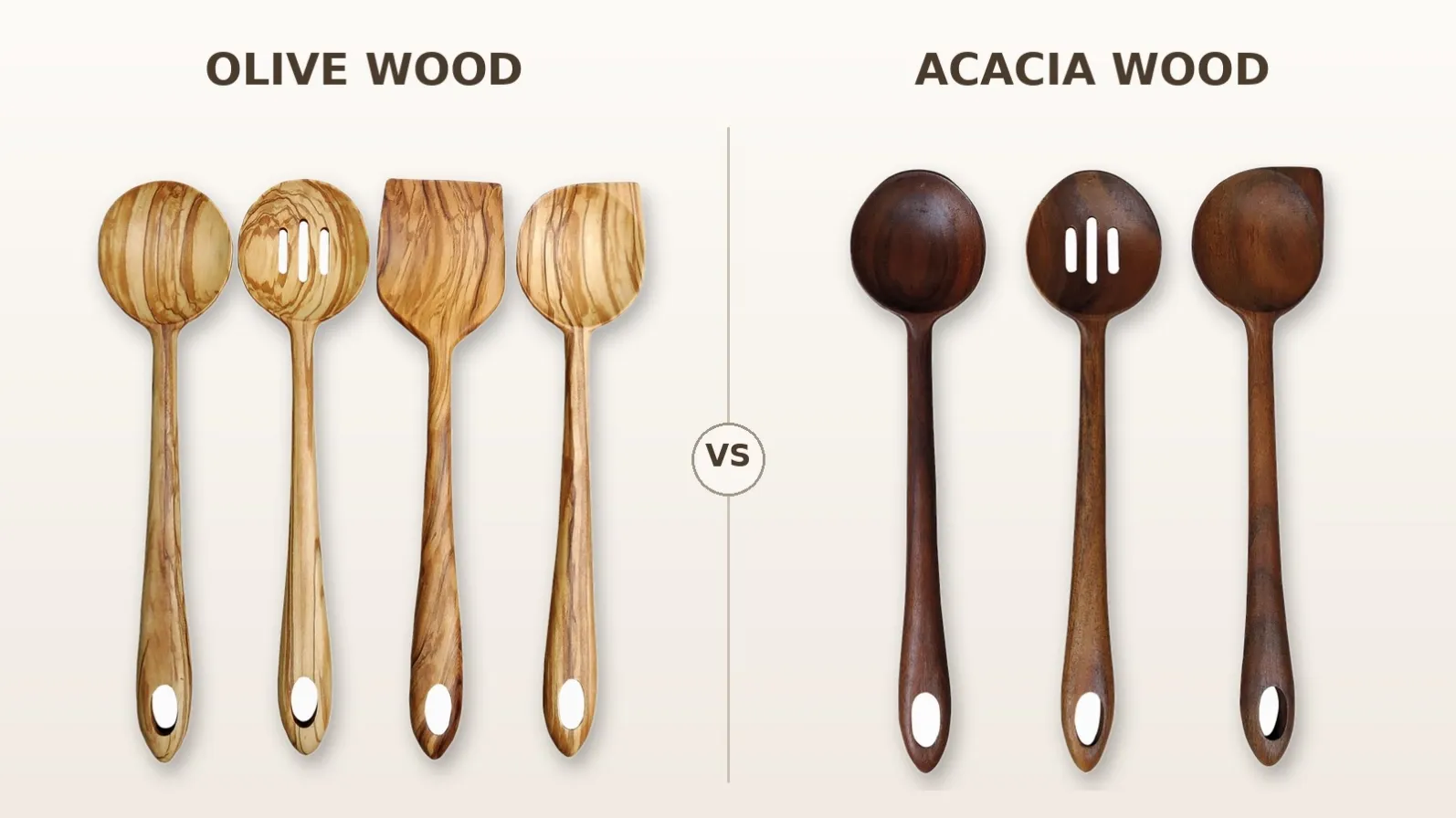
More buyers have asked me about olive wood this year than in the previous five combined. I understand why. You see one olive wood spoon in a product photo and it stops you — that wild, dark, wavy grain looks like nothing else on the shelf. Acacia doesn't stop anyone mid-scroll. And yet, most of the utensil volume we ship is still acacia. Both things are true, and if you're choosing a wood for your brand, it's worth understanding why.
Olive wood: beautiful, and honestly a bit difficult
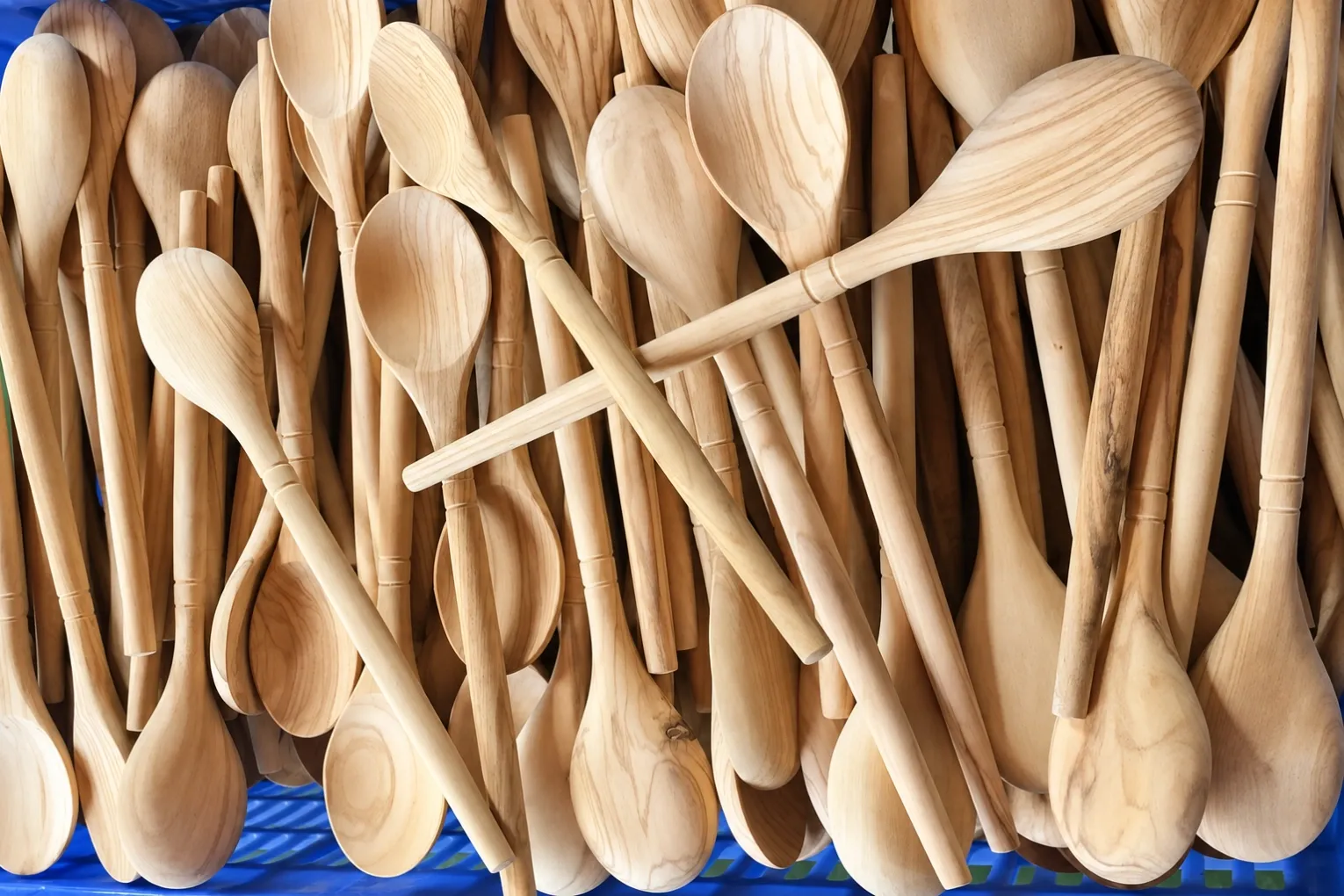
Olive wood comes from olive trees around the Mediterranean. The trees grow slowly, they twist as they grow, and most of the usable wood comes from pruned branches and old trees that no longer produce fruit. Nobody clear-cuts an olive plantation for timber. That one fact explains almost everything else about this wood.
The logs are small and irregular. So when a buyer asks for a wide serving piece or a deep ladle in one solid piece of olive wood — no joins, no glue — I have to tell them the truth: pieces like that exist, but the blank is hard to find, the yield from each log is low, and the price moves with whatever the timber merchants managed to get that season. Some months the good material is there. Some months it isn't, and no factory can promise its way around that.
What you get for the trouble is a very hard, heavy wood with grain that never repeats. Two spoons from the same log don't match, and for the right brand that is exactly the point. It also carries natural oils, so a finished piece feels rich in the hand and holds up well in a kitchen. On a gift shelf or a premium listing, olive wood earns its price.
Acacia: the workhorse
Acacia is nearly the opposite story. It grows fast, it's plantation-grown in large volumes, and the supply is steady enough that I can plan production around it without crossing my fingers. The grain is warm — honey browns, sometimes with darker streaks — and while it won't stop anyone mid-scroll, it photographs well and looks consistent from one batch to the next. For a private label line, that consistency matters more than people admit. Your tenth reorder should look like your first.
One warning, because buyers get caught by this: "acacia" is a family name, not one wood. There are many species sold under it, and they don't all look or weigh the same. When a factory quotes you acacia, ask which species. If they can't answer, that tells you something.
Sizes are easier too. Acacia comes in bigger, cleaner pieces, so wide boards and long utensils are routine work, not a hunting expedition.
In daily use, both do the job
For spoons, spatulas and turners, both woods are hard enough and kind to non-stick pans. Olive is the harder and heavier of the two — you feel it the moment you pick a piece up. Care is the same story for both: hand wash, dry them, a little food-safe oil now and then. Neither wood belongs in a dishwasher, and any brand selling either should print that on the packaging before the returns teach them to.
Why the prices differ
Buyers sometimes assume the olive wood price is a markup game. It isn't, mostly. Before anyone in my factory touches a piece, the olive blank already costs several times the acacia one — small logs, low yield, and a good share of each piece lost to cracks and defects you can only see once you cut in. Acacia's price is steadier because the raw material is. So the real question is not "why is olive expensive" but "can my channel carry that price, every season, even when supply tightens?"
So which one fits your brand?
If you sell a premium or gift line, if your customers pay for story and for pieces that look one of a kind, olive wood is worth building around — just plan your ordering around its supply, and don't promise your channel unlimited stock. If you sell volume, run promotions, or need five hundred sets this quarter and the same again next quarter without surprises, acacia is the wood that will not let you down.
Quite a few of my buyers end up doing both: olive wood for the hero pieces at the top of the range, acacia for the everyday line underneath. That mix is not a compromise. It's just matching the wood to the job.
If you're deciding right now, tell me your channel and the retail price you're aiming at, and I'll tell you honestly which one I'd choose in your place. Sometimes the answer is the cheaper wood. I'm fine with that.
Quick answers
Is olive wood better than acacia for utensils?
Better looking, not better working. Olive is harder, heavier, and every piece is one of a kind; acacia is steadier in supply and price, and looks the same batch to batch. Both are hard enough for daily cooking.
Why is olive wood so much more expensive?
The blank, not the making. Olive logs are small and irregular, yield is low, and defects only show after cutting — the raw piece costs several times an acacia blank before any work starts.
Which wood is safer for repeat orders?
Acacia. Plantation-grown, steady volume, consistent colour. Olive supply moves with the season, so plan ahead and don't promise your channel unlimited stock.