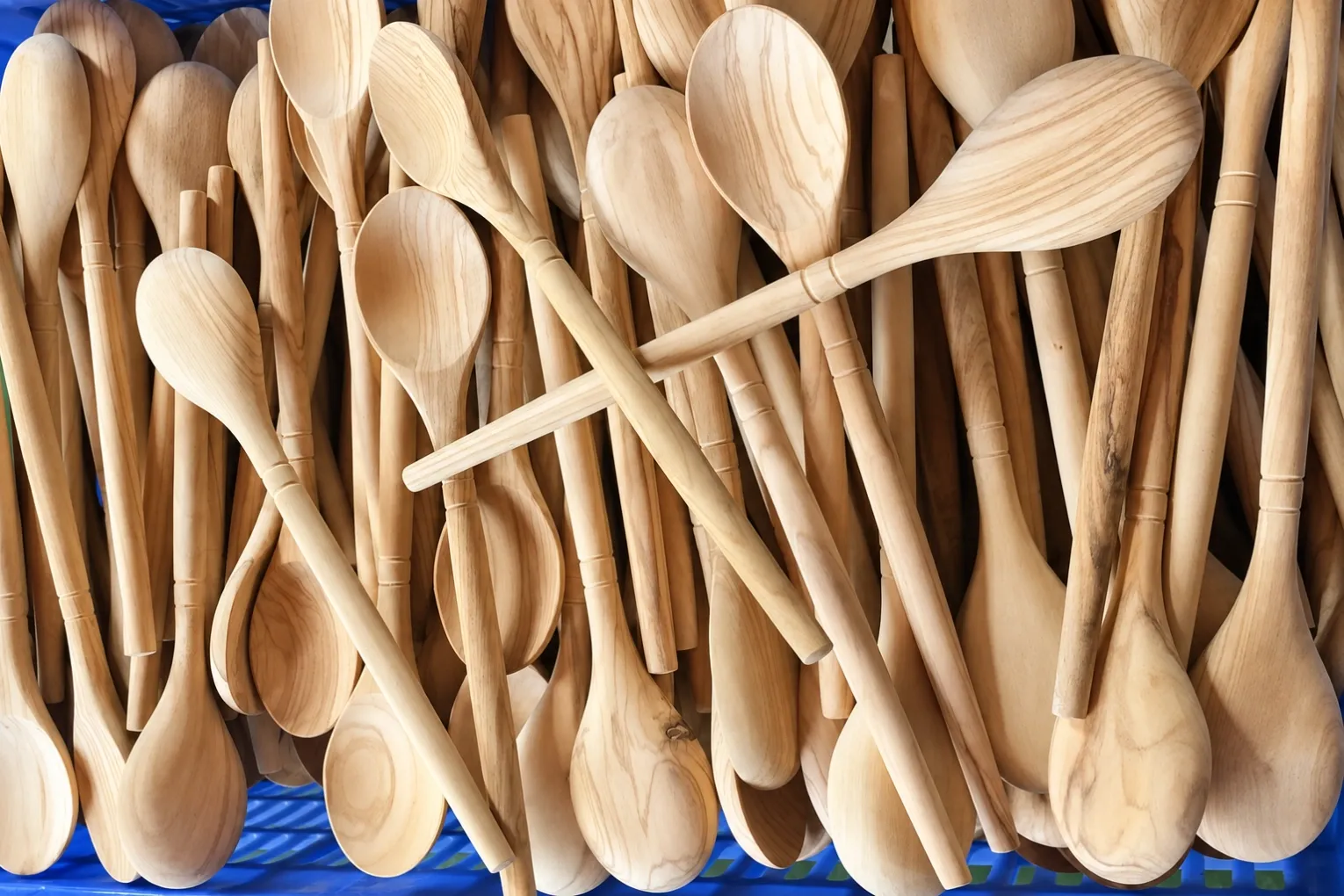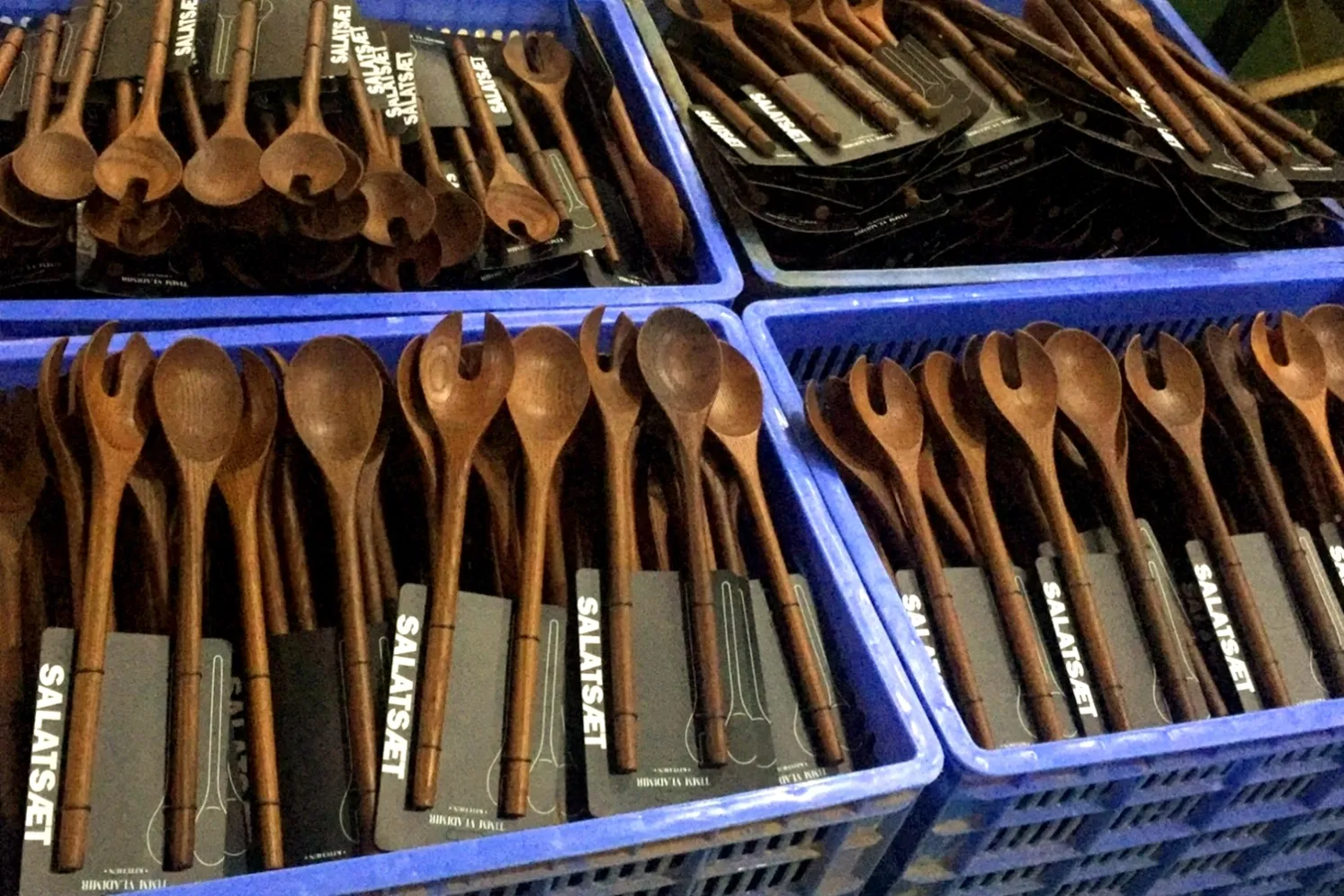
Wooden Kitchenware and Sea Freight: Preventing Mold
Mold, cracking and warping are mostly decided before the container leaves. What a factory does about drying, packing and loading — and what to check on arrival.
Wooden Kitchenware and Sea Freight: How to Prevent Mold, Cracking and Warping
Short answer first. Most mold, cracking and warping is decided before the container leaves — in how the wood was dried, how it was packed, and how the container was loaded. Open the doors at the other end and you are mostly reading the result of those three decisions.
Why does wood go mouldy inside a container?
A container at sea is not a dry room. Day and night temperatures swing, warm damp air hits cold steel, and water condenses on the roof and runs down. People in shipping call it container rain — I have opened cartons where the top layer was damp and the bottom was fine, just from water dripping off the ceiling.
Mold needs three things and a container supplies all three: moisture, warmth, and something to eat. Wood is the food. So the job is not to sterilise the wood — you cannot — it is to keep the moisture away from it for the whole voyage. The wood must go in dry, the packing must keep outside damp out, and the container itself must be dry when it is loaded.
What does a factory actually do before the wood ever sees a box?
Everything important happens before packing. Fresh-cut wood holds far too much water to ship, so we dry it first — air drying, then kiln drying — and then we let it rest. Wood that comes straight out of a kiln and into a box is still settling; wood that has rested in the workshop has found its balance with the air around it, and it moves less afterwards.
Then we check it, batch by batch. Every batch is moisture-tested before it is released for production, and a batch that fails our own standard goes back to dry instead of being made into boards. I am not going to put a number here, because the right number depends on the wood and the destination. What a buyer should ask is simpler than a number: does the factory test every batch, and what happens to a batch that fails?
How should the packing itself fight moisture?
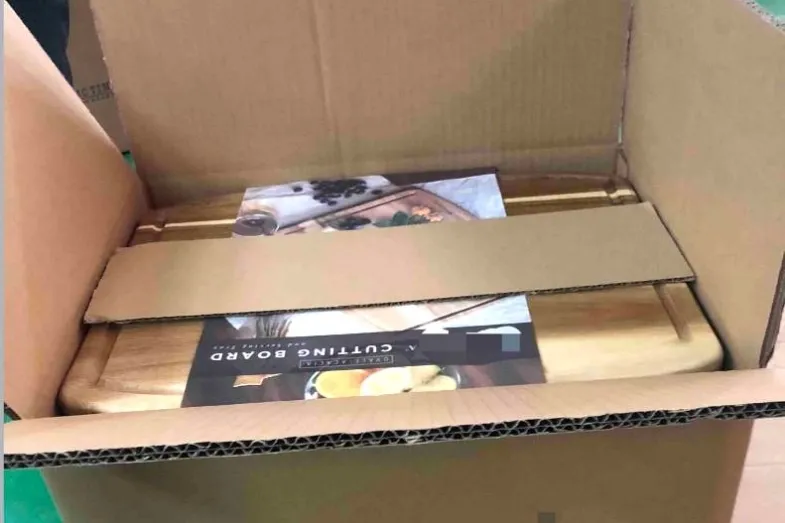
Think of packing as three layers, each doing one job. The inner layer keeps the piece clean and dry — a bag or wrap that keeps damp air off the wood. The middle layer is the carton, and it has to be dry when it is packed: a carton that sat in a damp corner overnight is already working against you. The outer layer is the pallet and the wrapping that keeps the whole stack off a wet floor.
Desiccant goes inside this system, not instead of it. The little bags absorb the damp already trapped in the air inside the carton, and they buy you time on a long voyage. How many and where exactly — that is a forwarder's call for the route and the season. What I will not do is pack wet wood with extra desiccant and call it solved. Desiccant is a seatbelt, not a brake.
What goes wrong at loading?
Loading day is where good preparation quietly dies. A container that looks fine can be wet inside — a roof leak, a floor that was washed and never dried, a door seal that lets rain in. Before a single carton goes in, somebody should walk inside, look up at the roof, run a hand along the floor, and check the door seals. A container that smells musty has already told you everything.
Then it is about how the cartons sit. They go on pallets, never straight on the floor, and clear of the walls where condensation runs. Air needs a path around the stack, so we do not pack cartons tight against the roof. And nothing wet shares the box with wooden kitchenware — I have seen boards ruined because the other half of the container was cargo that sweated.
What should you check when the container arrives?
Open it promptly. Do not let a sealed container sit in a humid warehouse for a week while paperwork clears — every extra day sealed is a day the damp has to work. Open the doors, let the air move, and check the top cartons first: that is where container rain lands.
Look for three things: white or green spots on the wood, cartons that feel soft or damp, and boards that have bowed or split at the ends. Surface mold on a finished board is often only skin-deep — but photograph it the same day and tell the factory the same day. A claim with photos taken on arrival is a different conversation from one raised three weeks later.
If the goods look fine, still give them a day in a dry, ventilated room before they go into retail packaging. Wood that travelled for five weeks has earned a day to breathe.
Which shipments are the riskiest?
The honest answer is the first one with a new factory, a rainy-season loading, and a long route with a transshipment in the middle. That is also the shipment where a buyer should ask the most questions before it leaves: how was this batch dried, how was it packed, and who checked the container?
A factory that can answer those three questions in plain language is a factory that has done the work. If you are reviewing a supplier, start there — and the range itself is on our wooden utensils wholesale page.
Quick answers
What causes mold on wooden kitchenware during shipping?
Damp wood packed into a container, plus condensation from temperature swings at sea. The wood must go in dry, the packing must keep damp out, and the container must be dry at loading.
Does desiccant alone prevent mold?
No. Desiccant absorbs trapped damp inside a carton, but it cannot fix wood that was packed wet or a leaking container. It is backup, not the main defence.
Why do wooden boards crack after arriving?
Usually the wood was not dried and rested properly before production, or it dried out too fast in transit. Straight grain, proper drying and a day to acclimatise after arrival all help.
What should I check first when opening a container?
The top cartons — that is where condensation drips land. Look for spots on the wood, soft or damp cartons, and boards bowed or split at the ends, and photograph anything wrong the same day.