Designing a Wooden Utensil Set That Sells
Which pieces belong in a wooden utensil set? The core five cooks use daily, what 7- and 10-piece sets really add, and matching the set to your channel.
Designing a Wooden Utensil Set That Sells: Which Pieces to Include – 5-Piece, 7-Piece or 10-Piece
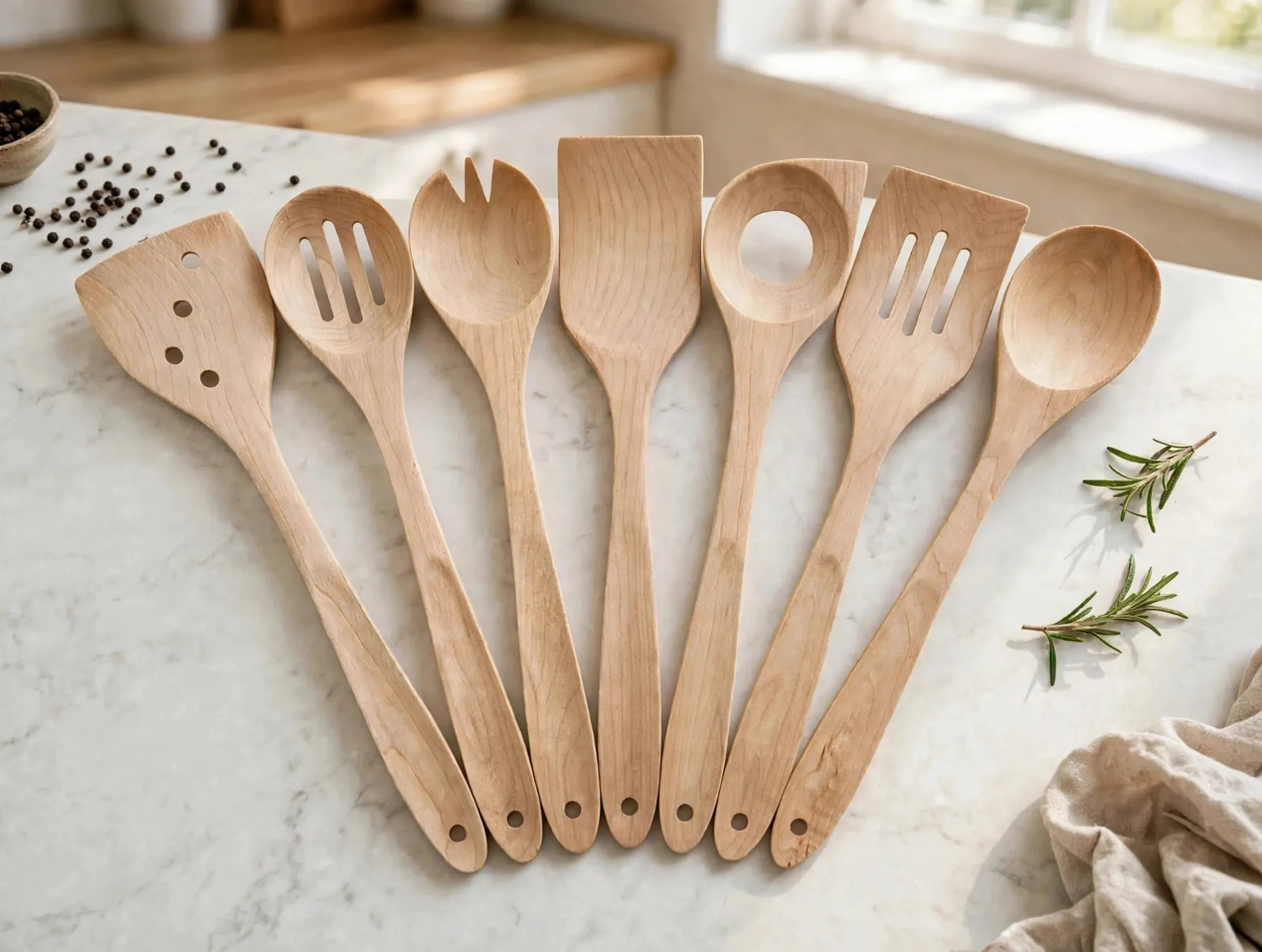
Let’s cut straight to it. A 5-piece set covers almost all daily cooking: cooking spoon, flat spatula, turner, slotted spoon and ladle. A 7-piece set adds serving tools for the table. A 10-piece set is mainly for gifting and display. It makes a nice present, but most extra pieces rarely get used at home. Build your set around tools people use and wash every day, not just to boost the piece count.
Which Five Tools Form the Kitchen Core?
Think about what home cooks grab on busy weeknights.
A spoon for stirring and tasting. A flat spatula to scrape pans clean and stir-fry. A turner for flipping eggs, fish and burgers. A slotted spoon to lift pasta and veggies from boiling water. And a ladle — it’s essential, since soup is popular in every country we ship to.
These five are your must-have basics. Every tool has a clear, regular job. Leave any one out, and the set feels incomplete. A set without a ladle may look great in photos, but buyers will get frustrated later. Adding a second spoon with only a small size difference is clearly just padding. Shoppers and reviewers spot these unnecessary extras right from product photos.
What Changes When You Upgrade from 5-Piece to 7-Piece?
A 7-piece set works for both cooking and table serving.
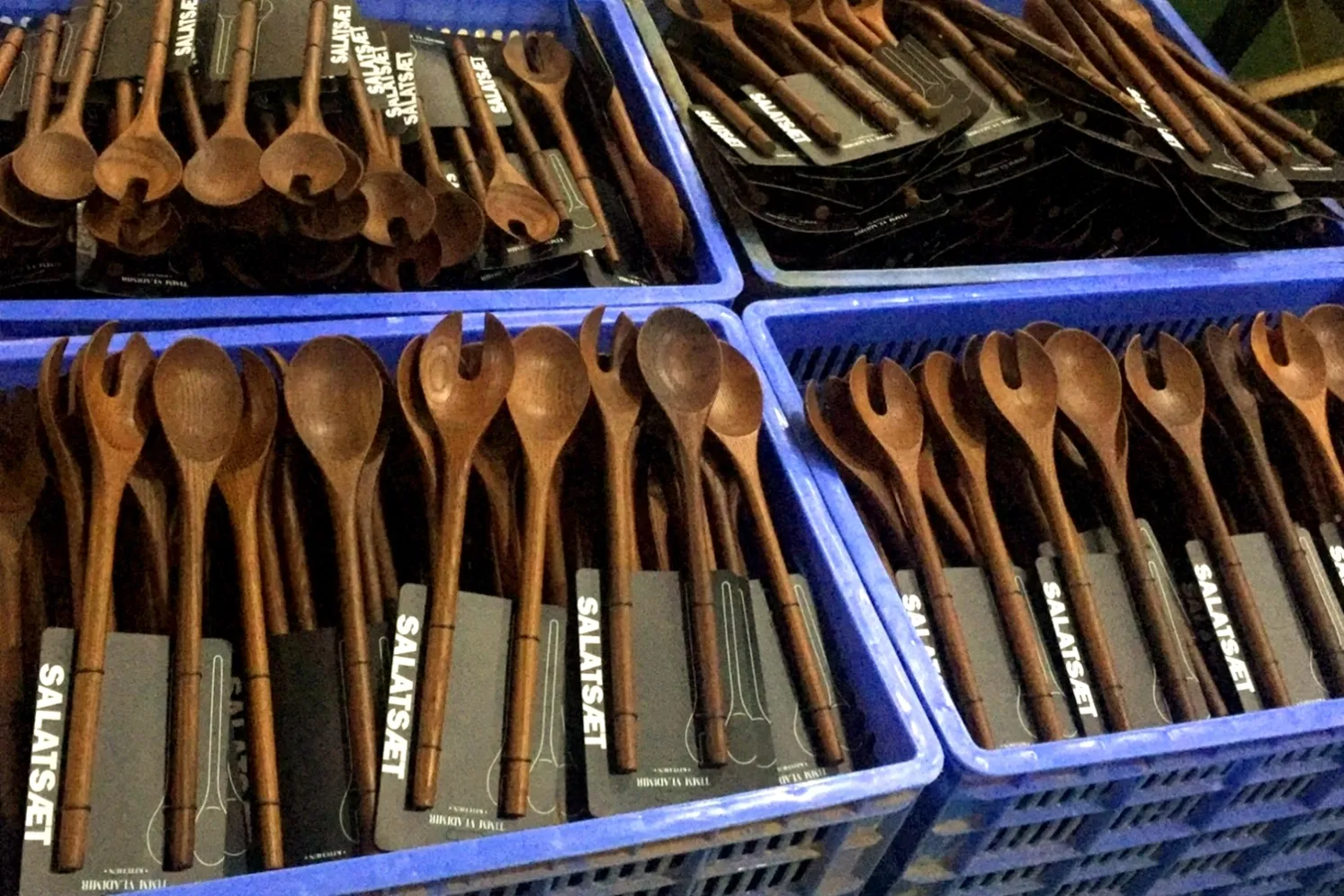
The two extra pieces are usually a salad spoon-and-fork set, or a pasta server plus kitchen tongs. This is no longer only for cooking — buyers can bring it straight to the table for guests.
This is our most requested set, and for good reason. The 5-piece set is practical, for people who need working tools. The 7-piece set feels like a nice little treat for yourself. On store shelves, it hits the sweet spot: fully equipped, with no useless extras. It also fits pricing well — more than the basic set, cheaper than fancy large gift boxes. If you only stock one main option, go with this.
What Does a 10-Piece Set Actually Deliver?
I’ll be honest, many suppliers won’t say this. The 8th, 9th and 10th pieces mostly exist to make the gift box look fuller. Think corner spoons, small spatulas, butter spreaders. They work, sure, but they get used about as often as fondue forks stuck at the back of a drawer.
This isn’t bad — it all depends on your buyers. Gift lines, wedding gift lists and holiday displays love higher piece counts. The set looks generous, so the price feels justified. Gift recipients won’t track how often they use that corner spoon.
But if your sales depend on honest reviews from daily home cooks, these rarely used extras are what trigger bad feedback. I’ve read “half the set is just for show” on many product pages.
Pick the 10-piece set for gift sales. Don’t choose it thinking more pieces mean better value. Regular home cooks care about usefulness, not how many tools come in the box.
Does the Storage Holder Count as One Piece?
Many sellers count the storage holder as a piece, and this makes the advertised numbers misleading.
One brand’s “7-piece” means seven usable tools. Another labels six tools plus a holder as 7-piece. A “10-piece” set might be eight tools, a holder and a gift box. All these mixed listings show up together in search results.
When you compare quotes, including ours, count only the working tools and ignore the big number in the title. In my quotes, I list everything clearly: each utensil separately, with holders and packaging listed as separate items. The headline number is marketing. The item list is what you actually order. This trick is common in the wooden utensil business. I wrote a separate post about why quotes for the same set can differ by up to 30%.
Align Your Set Design With Your Sales Channel
Custom brand orders fit all three sales styles. Start with the five core tools. Then add serving pieces that match local eating habits: salad servers where salads are common, pasta servers where Italian food sells well, and tongs for almost every market.
Wood types, finishes and packaging choices are on our wooden utensils wholesale page. Logo and gift box customization tips are in our private label utensil set guide.
Tell me how you sell and your target retail price, and I’ll recommend the best set size. I’ll also tell you which pieces you can leave out — even if cutting them makes the order smaller.
Quick FAQs
What is the best-selling wooden utensil set size?
7-piece is still our most popular: five core cooking tools plus two serving pieces. It looks complete on shelves with no obvious filler.
Should every set include a storage holder?
Retail: yes. Standing display makes it look like a proper set, not loose tools.
Online sales: usually no. Holders add weight and raise shipping costs, and most buyers already have somewhere to store utensils.
Can one set use different kinds of wood?
Absolutely. Mixed-wood sets sell well. For example, acacia cooking tools paired with olive wood salad servers. Just lock in all wood types on your product sheet before production.
Can we put our own logo on it?
Yes. Laser engraving on handles is standard. Keep your logo simple and bold. Thin lines disappear into wood grain, especially on acacia and olive wood.