Why Do Wooden Cutting Boards Warp or Crack? A Practical Guide for Buyers
Learn why wooden cutting boards warp or crack, what to ask your supplier, and how to set inspection standards before placing a bulk order.
Why Do Wooden Cutting Boards Warp or Crack? A Practical Guide for Buyers
You approve the sample, confirm the packaging, and place the order. Everything looks fine.
Then a customer sends you a photo. The board won’t sit flat on the counter. Or there’s a crack near the edge.
Now you have questions. Is it one board or a whole batch? Did something happen during production, shipping, or storage? And what should you do before ordering again?
There isn’t always a quick answer. But there are a few things worth looking at before you accept an explanation—or a promise that it won’t happen again.
“The Wood Was Dried” Is Only the Starting Point
When you ask about cracking or warping, a supplier may tell you the wood was dried before production.
That’s useful to know, but it doesn’t tell you the whole story.
Wood still takes in and releases moisture after it becomes a cutting board. Changes in moisture can make it shrink or swell, and uneven movement can lead to distortion or cracking. Drying, handling, and storage all play a part. A finish can slow moisture exchange, but it cannot stop it completely.
So it helps to take the conversation a little further:
- “When do you check the moisture content?”
- “Do you check pieces from different parts of the batch?”
- “What happens if a reading falls outside the agreed range?”
You don’t need to become a wood-drying specialist. You do need to understand what the supplier checks and what they do with the results.
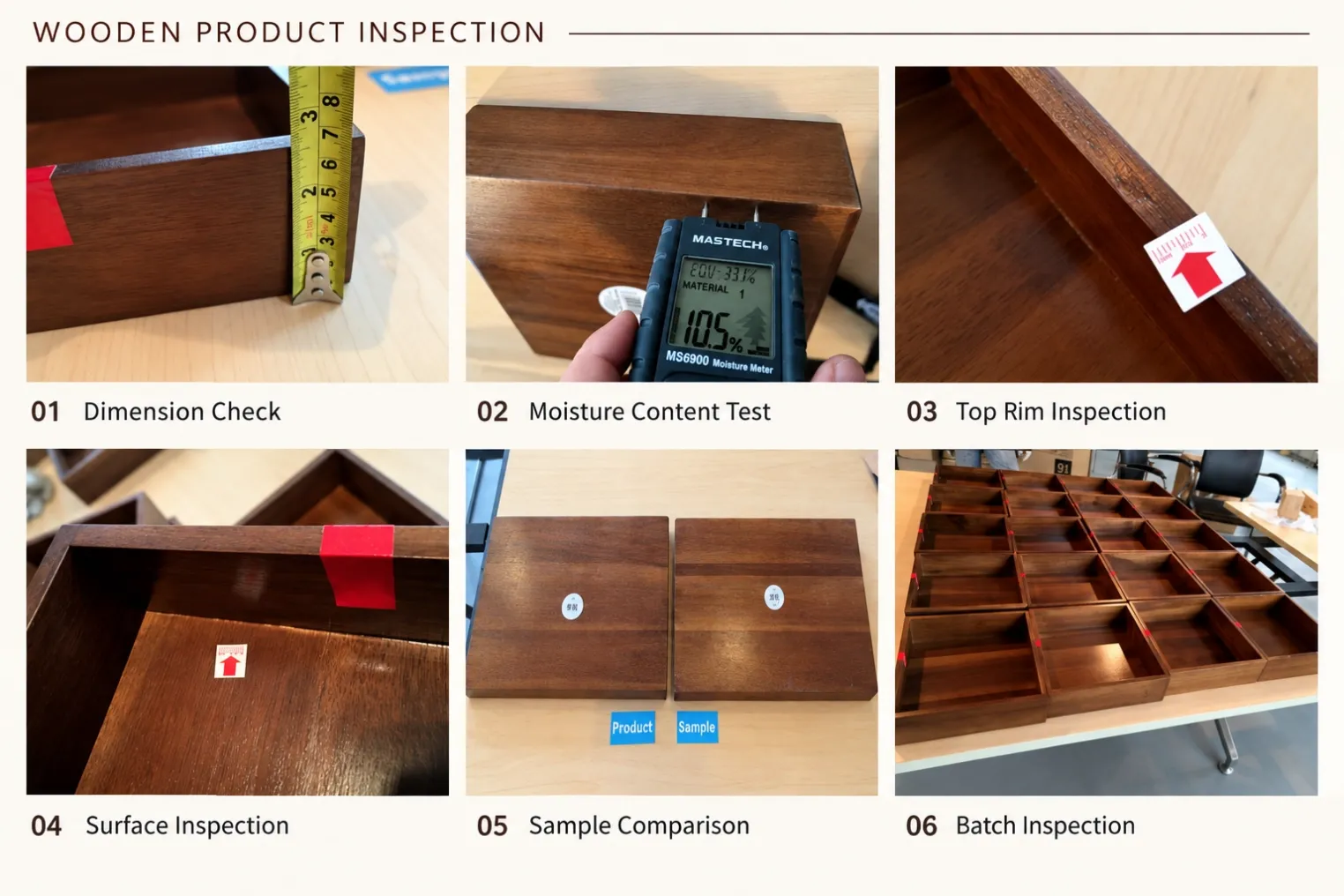
A photo of a moisture meter is useful. A batch record gives you more to work with.
Find Out What “Cracked” Actually Means
If a customer says a board has cracked, ask for a few clear photos before deciding what caused it.
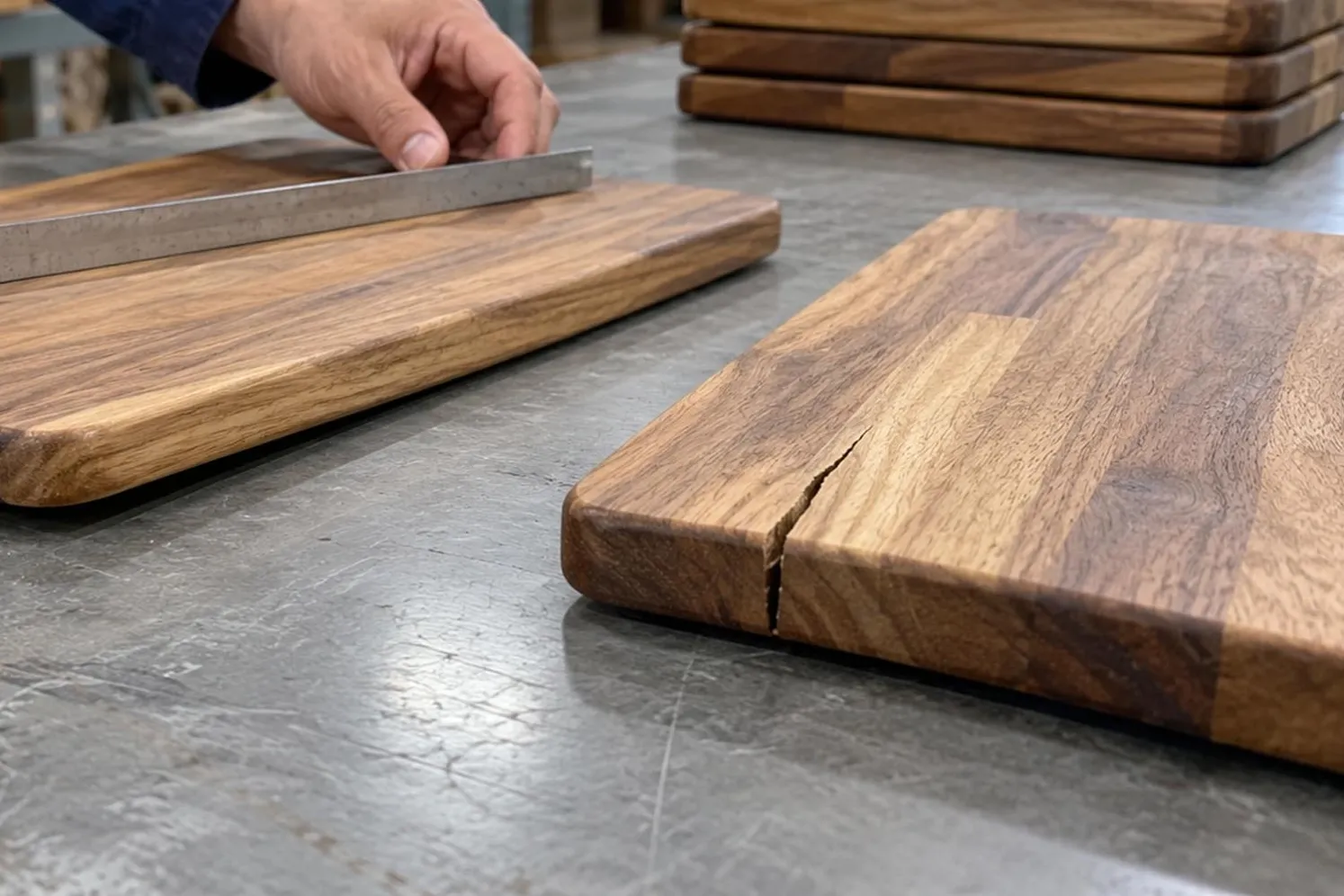
Get one photo of the whole board and another showing the damaged area. Is the split running through the wood? Is a joint opening between two pieces? Is the damage near a corner?
Also ask when the problem appeared. Was it there when the packaging came off, or did it develop after the board had been used?
These details help you have a more useful conversation with the manufacturer.
For example, an opening along a joint gives you a reason to ask about joint preparation, adhesive application, pressing, and curing. It does not, by itself, prove that the adhesive was the problem.
The same goes for blaming storage or customer care. Those may need investigating, but they shouldn’t be the automatic explanation.
Start with what you can see and document. Then work through the possible causes.
A Good Sample Doesn’t Tell You Everything About the Order
A sample helps you judge the size, finish, shape, and general feel of a board. It’s an important part of buying.
But you’re not buying just that sample. You’re buying a production batch.
Before placing the order, ask how the supplier will check the finished boards. If you say they must be “flat,” make sure both sides understand how that will be assessed.
What surface will be used? How will any gap or movement be measured? What is acceptable, and what will be rejected?
The same applies to cracks and open joints. Agree on the criteria before production, while there is still time to discuss them.
It’s much easier to resolve a problem when both sides can refer to the same written standard.
Ask What Happens Between Production and Shipping
It’s easy to focus on how the board is made and overlook what happens afterward.
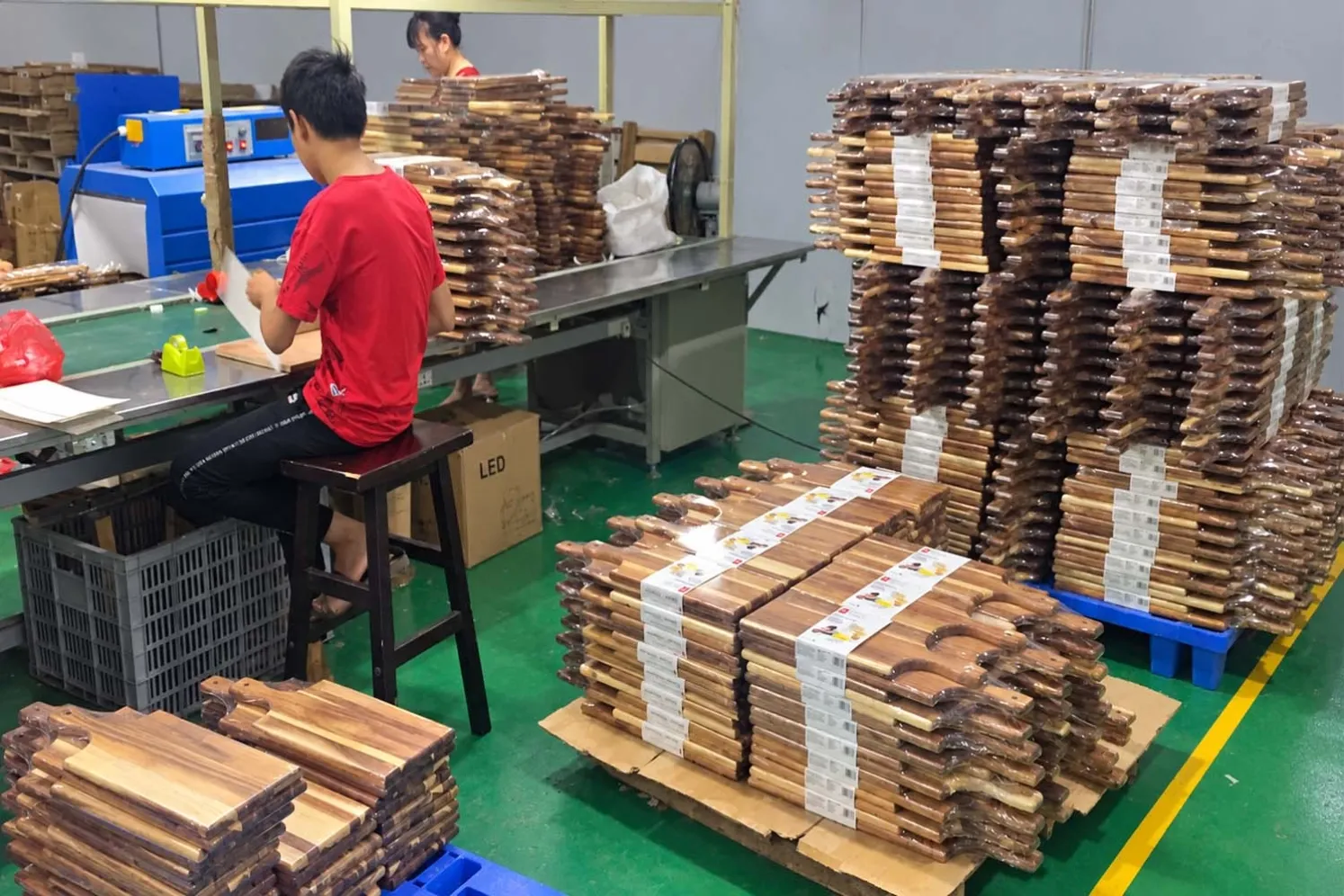
Ask where finished boards are kept before packing. Find out how long they normally wait there, what packaging is used, and whether any storage guidance comes with the shipment.
You can keep the questions straightforward:
- “Can you show us how the finished boards are stored?”
- “Can we see photos of the actual packing?”
- “Is there anything our warehouse team needs to know?”
When the goods arrive, take photos of the cartons before opening them, especially if you notice dampness or damage. If there is a problem later, those records can help fill in the gaps.
Care instructions are worth reviewing too. Ask for guidance that matches the product’s construction and finish, then read it from the customer’s point of view. Would someone know what to do after washing the board? Are the instructions easy to find and understand?
Agree on How Problems Will Be Handled
Nobody wants to plan for complaints. Still, this is a conversation worth having before the order is placed.
If some boards arrive warped or cracked, what does the supplier need from you? Who will review the issue? When should you expect an answer?
Usually, you’ll want to have the batch details, affected quantity, photos, and the date the problem was found. Keep affected products available for examination where practical.
Then agree on how a remedy will be decided under your purchasing terms.
If you’re placing a repeat order after a problem, ask what will change this time. “We’ll be more careful” doesn’t give you much to check. Ask which part of the process was reviewed, what action was taken, and how the result will be verified.
One Question Worth Asking Your Supplier
Before your next order, try asking:
“Can you walk us through how you check a batch for warping and cracking before it ships?”
A useful answer should be fairly easy to follow. You should come away knowing what gets checked, when it happens, how the results are recorded, and what happens to boards that don’t pass.
That won’t answer every question about future performance. It will give you a clearer view of how the order is being managed—and a better basis for deciding whether to move forward.
Sourcing wooden cutting boards for your business? Tell us what you’re looking for and any problems you’ve had with previous orders. We can use those details to discuss your next order’s specifications, inspection requirements, and packaging.