Buying Wooden Cutting Boards in Bulk
Learn what to check on specifications, quality, packaging, documentation, lead times, and total costs. A practical guide for importers, wholesalers, and private-label brands.
Buying Wooden Cutting Boards in Bulk: What Buyers Should Check Before Placing an Order
Sourcing wooden cutting boards involves more than choosing an attractive design and negotiating a unit price. For importers, wholesalers, retailers, and private-label brands, a successful order also depends on consistent product quality, suitable packaging, clear specifications, and reliable communication.
Samples help buyers evaluate a product, but they cannot answer every question about a bulk order. Before committing, buyers should clarify how the products will be manufactured, inspected, packed, and approved.
Drawing on years of experience, I have identified the following key areas to review when sourcing wooden cutting boards.
1. Define Product Specifications Clearly
Start by confirming the wood species, board dimensions, thickness, construction, and surface treatment. Specify functional details such as juice grooves, handles, hanging holes, or non-slip feet, where applicable.
Wood naturally varies in grain and color, so no two boards will look exactly alike. Buyers and suppliers should agree on an acceptable range of variation. Reference photos can help distinguish desirable natural characteristics from defects that may fall short of customer expectations.
Written specifications provide a shared reference for both parties throughout production and inspection.
2. Turn Quality Expectations into Inspection Criteria
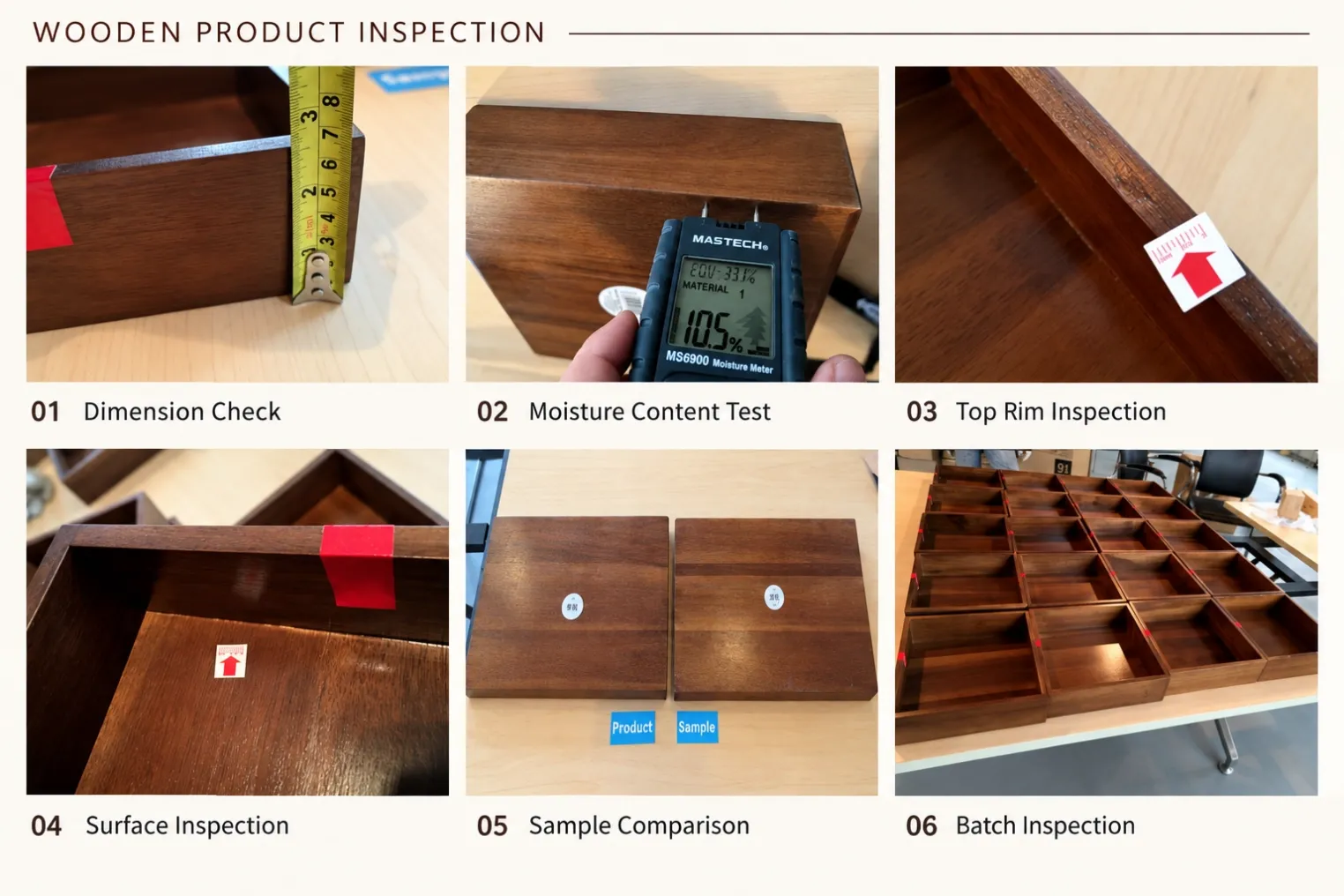
Terms such as “high quality” and “smooth finish” can be open to interpretation. Buyers need specific, verifiable criteria.
As a manufacturer, we assess the following:
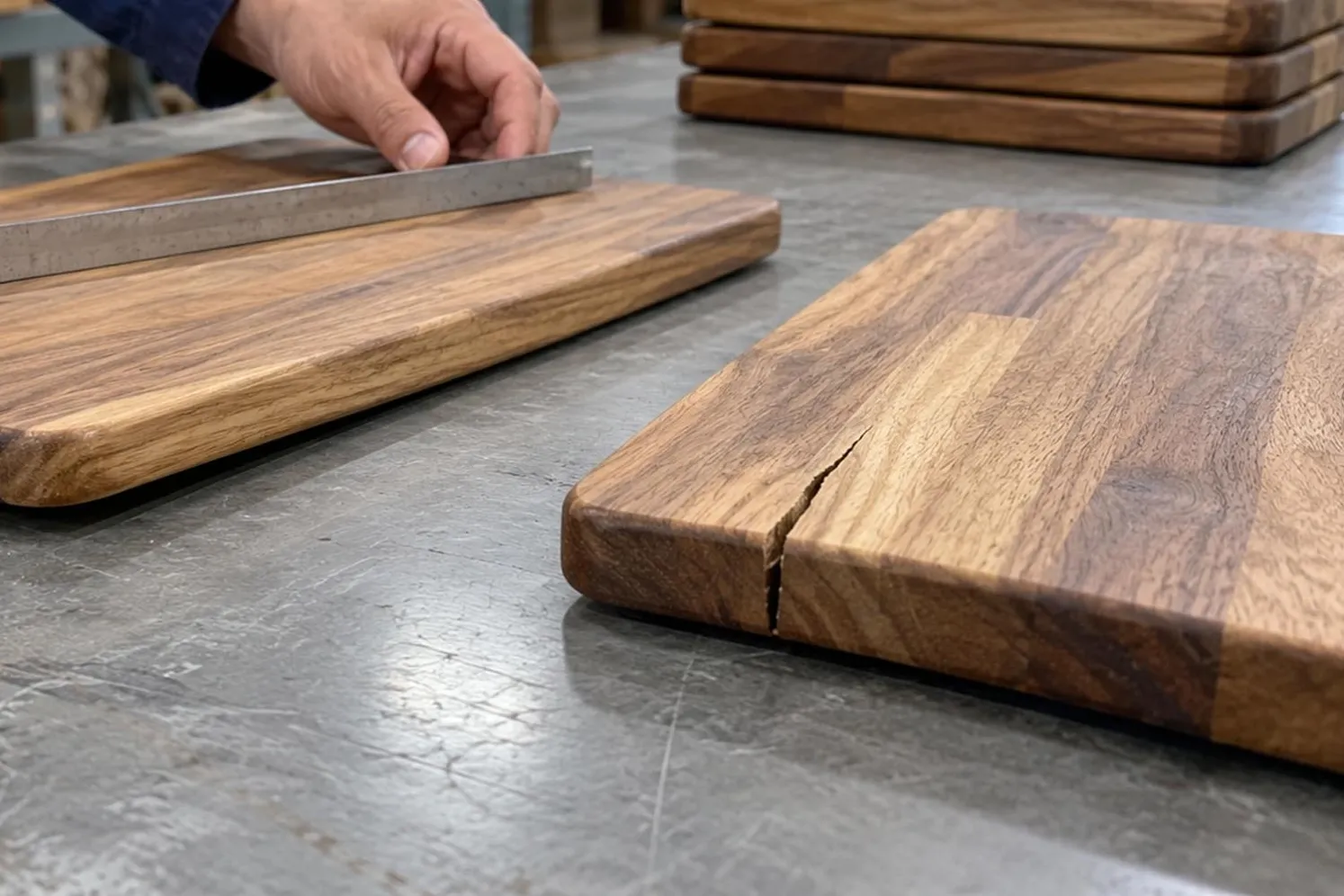
- Cracks, splits, and visible gaps at glue joints
- Flatness and stability on a level surface
- Surface roughness, splinters, and sharp edges
- Dimensions and agreed tolerances
- Logo placement and engraving quality
- Acceptable color variation in the wood
- Cleanliness and the overall condition of finished products
To address cracking and warping concerns, ask how the supplier manages wood drying, moisture-content checks, storage, and packaging. The acceptable moisture-content range should be considered alongside the wood species, measurement method, and expected storage and use conditions.
Both parties should agree on inspection methods and acceptance criteria before bulk production begins.
3. Clarify What the Approved Sample Represents
An approved sample should establish more than the product’s appearance.
Document the details it confirms, including materials, construction, dimensions, surface finish, branding, and packaging. If the sample differs from the planned bulk product in any way, record those differences before approval.
Where practical, both the buyer and manufacturer should retain an approved reference sample, supported by photographs and a specification sheet. Any subsequent changes should be reviewed and documented.
This helps prevent a common sourcing problem: the buyer and supplier working from different versions of what was approved.
4. Tailor Packaging to Your Sales Channel
Packaging requirements vary depending on whether the products will be sold through retail stores, online marketplaces, gift programs, or hospitality channels.
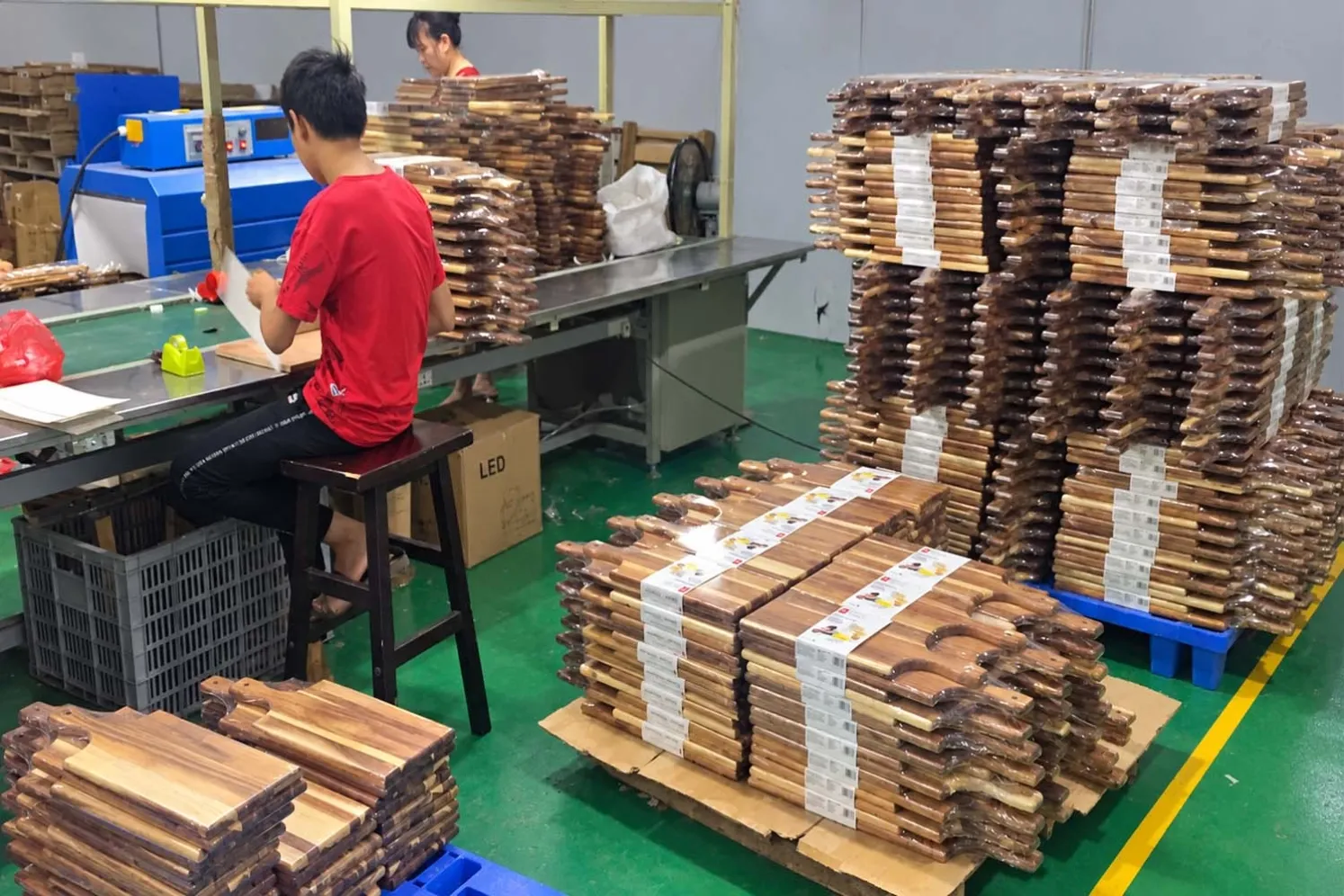
As a manufacturer, we evaluate protection at both the individual-product and shipping-carton levels. We consider surface scratches, edge damage, movement inside the carton, and the conditions products may encounter during transport and storage.
For retail-ready products, confirm packaging artwork, barcode placement, care instructions, and any required labeling before printing.
Also request carton dimensions, gross weight, and the number of units per carton. These details help you assess freight costs, warehouse handling, and storage requirements before placing an order.
5. Verify Materials and Relevant Documentation
Buyers should understand the materials used in the finished product, including the wood, any adhesives, and any oils, coatings, or other surface treatments.
Ask what documentation is available and whether it applies to the exact product and materials being ordered.
Documentation requirements depend on the destination market, product type, and sales channel. Establish these requirements early and confirm them with qualified advisers or testing providers where necessary.
Clear material information also helps your team prepare accurate product listings and respond promptly to customer questions.
6. Plan Your Order Around Approval Milestones
The delivery date depends on more than production time alone. Sampling, design approval, packaging preparation, inspection, and shipping arrangements can all affect the schedule.
Clearly identify the key milestones:
- Final specification and sample approval
- Packaging and artwork approval
- Production completion
- Inspection and any corrective work
- Shipment readiness
Also clarify when the quoted lead time begins and how changes made after approval will affect the schedule.
For seasonal collections or promotional launches, allow time to review inspection results and resolve any issues before shipment.
7. Compare the Total Cost, Not Just the Unit Price
A lower unit price does not necessarily mean a lower total purchasing cost. Compare quotations on the same basis, including product specifications, packaging, order quantity, delivery terms, and inspection requirements.
Confirm whether sampling, customization, printing setup, product testing, and any additional charges are included in the quotation.
Consider how the products will perform within your business. Cutting boards that require additional unpacking or handling, generate avoidable complaints, or arrive with an inconsistent appearance can create extra costs.
Build a Strong Foundation for a Long-Term Supply Relationship
Effective supplier communication goes well beyond price. Before placing an order, agree on the procedures and available remedies for reporting shortages, damage, or quality issues.
These agreements should define acceptable quality standards, how quality will be verified, and what action will be taken if the order does not meet the agreed requirements. This gives both parties a stronger foundation for cooperation.
For buyers sourcing wooden cutting boards, these preparations are essential to a well-managed purchase.
Are you planning a bulk purchase of wooden cutting boards? Contact us with your target market, estimated quantity, product specifications, and packaging requirements to discuss your sourcing needs.