Serving Trays: Acacia, Mango Wood or Bamboo?
Buying wooden serving trays wholesale? Acacia, mango wood and bamboo compared in plain terms — weight, strength, price, and which shops each one suits.
Serving Trays in Acacia, Mango Wood, or Bamboo: A Wholesale Buying Guide
I get this question in short emails all the time: "Flora, which wood is better for trays — acacia, mango or bamboo?"
My answer is always another question. Better for what?
A tray in a gift shop window has an easy life. A tray in a busy café gets carried forty times a day, wiped down, stacked in a pile and, sooner or later, dropped. Those are two different jobs, and the wood that's perfect for one can be a waste of money for the other. So let's go through the three, the way I explain it to buyers on the phone.
Acacia is the show-off
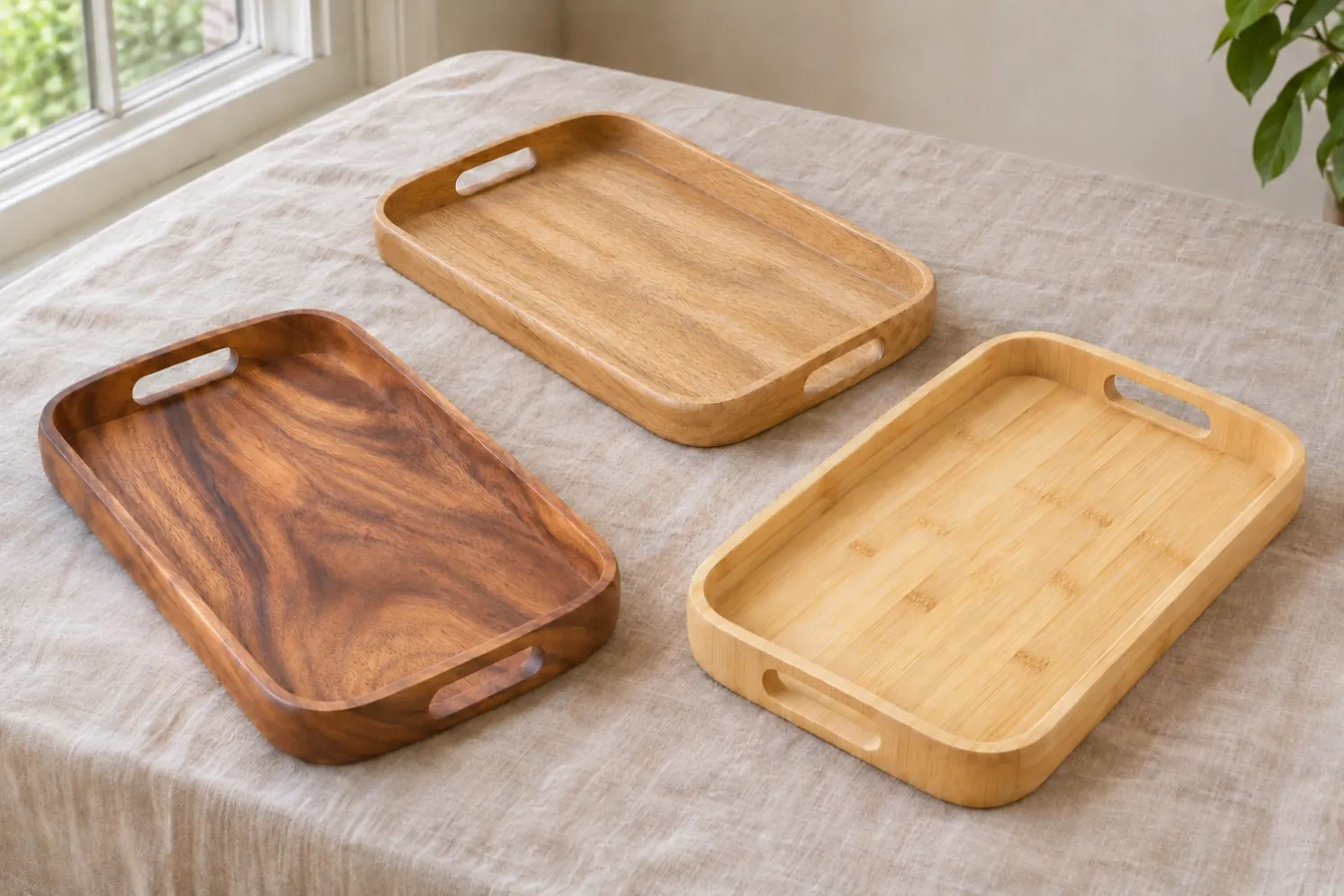
Acacia has the looks. Dark, rich grain, sometimes two colours running through the same piece. And it has weight. Buyers pick up an acacia sample, feel that weight, and nod — people just trust a tray that feels solid. It's hard, too, so the daily knocks don't bother it much.
But I'll tell you the downsides before you ask. It's the most expensive of the three. It's heavy, and trays are big, so your cartons get heavy and freight notices that. And no two pieces match exactly. Put two acacia trays side by side and they look like cousins, not twins. Some of your customers will love that. Others will email you about it. Warn them on the product page and you save yourself the emails.
If the tray itself is the gift — that's acacia.
Mango wood is the friendly one
When a buyer tells me the acacia price made their eyes water, mango is usually where we land.
It's lighter in every way: paler colour, less weight, lower price. It comes from mango trees that have finished giving fruit — the tree retires, basically, and the wood gets a second job. It also takes colour well, so you'll see it in everything from pale natural to dark walnut.
The catch is simple. It's softer. If trays get thrown around a warehouse or dropped on concrete corners, mango will show the marks sooner than acacia. For home use, that's honestly not a big deal. And if you're buying big trays, mango has one quiet advantage: your staff can still carry the thing when it's loaded. A large acacia tray full of glasses is heavier than people expect.
Rustic ranges, big sizes, a budget that has to behave — mango.
Bamboo confuses people, so let me clear this up
There is no solid bamboo plank. It doesn't exist. A bamboo tray is made of strips, pressed and glued together into a panel.
Once you know that, bamboo makes sense. The panels come out flat and even, so the first tray and the five-hundredth look like twins — if you sell to chains, or online where the photo has to match what lands on the doorstep, that matters more than pretty grain. It's light, it's strong enough, and the price is kind.
Two warnings, because I'd rather you hear them from me. Check the glue lines on your sample. A good panel stays together; a cheap one can start lifting along the strips, especially in a dry, heated room. And the grain is plain. Personally I find it a bit boring next to acacia, but that's taste, not quality. Plenty of shops want exactly that clean, quiet look.
If you sell online and your courier charges by weight, bamboo usually ends the argument.
So, quickly
Gift shop? Acacia. Big rustic trays, sensible money? Mango. Online, or anywhere freight runs the show? Bamboo.
And mixing is fine. A lot of buyers take acacia for the gift season and bamboo for the everyday line, in the same shipment. Nobody says you have to marry one wood.
Three things to do with your samples
Whatever wood you choose, do these before you talk about bulk. Not after.
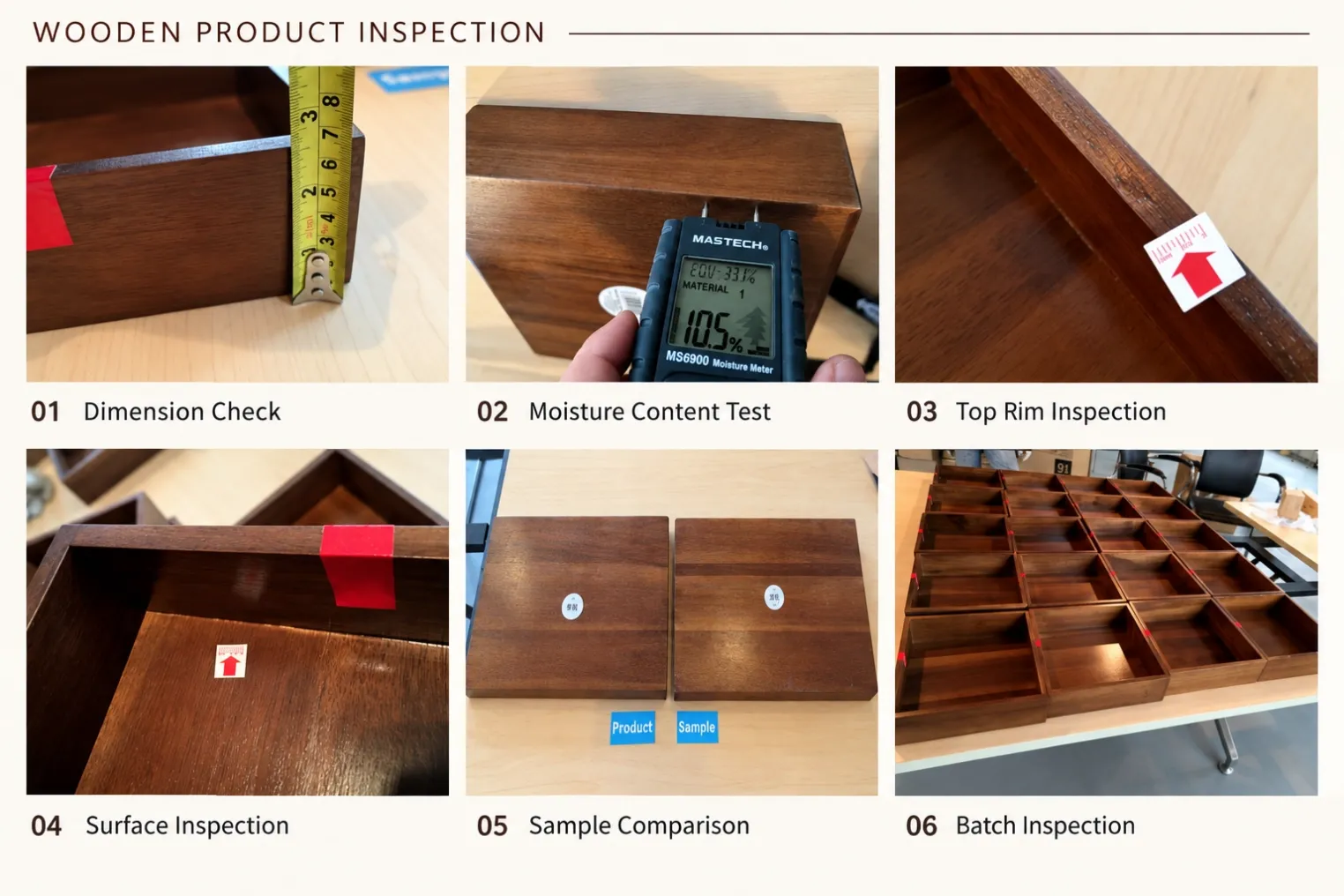
Load it and carry it. Not empty — empty trays lie to you. Put real glasses and a bottle on it, pick it up, walk across the room. And give the handles a proper pull while you're at it. Carved handles can't fall off. Screwed-on ones can.
Leave a wet glass on it overnight. If there's a ring in the morning that won't wipe off, that ring is coming back to you as a return. Ask what's on the surface and how it's supposed to be cleaned.
Press the corners. Set it on a flat counter and push each corner down. If it rocks, it will spill drinks for its whole working life. Ten seconds, that's the whole test.
One more, while you're talking cartons: ask how the corners are packed. Trays turn up with chipped corners more than any other damage I hear about. It's boring and it matters.
One last thing before prices
Home shops and cafés aren't buying the same product, even when the tray looks identical. A gift shop needs the looks and the packaging. A café needs a replacement next year that matches the set it already owns. Tell us which one you are in your first email — it honestly changes the quote.
People always ask how many they have to start with. Usually around 500 of one style, give or take. We'll pin it down when we see the size, because a big handled tray is simply more work than a small plain one.
Still stuck between two woods? Order the sample in both, same size, and do the carrying test in your own kitchen. Then write to me at [email protected] with your sizes and where you sell, and I'll tell you straight if I think you're paying for the wrong wood.
Quick answers
Which one is cheapest?
Bamboo and mango, most of the time. But do the maths on the delivered cost, not just our price — with something this big, freight can flip the answer.
Which one is strongest?
Acacia, no contest. Although in real life trays die at the handles and corners, not in the middle of the board. Check those first, whichever wood you pick.
Can I order two woods together?
Of course. They're just different styles in the same shipment.